
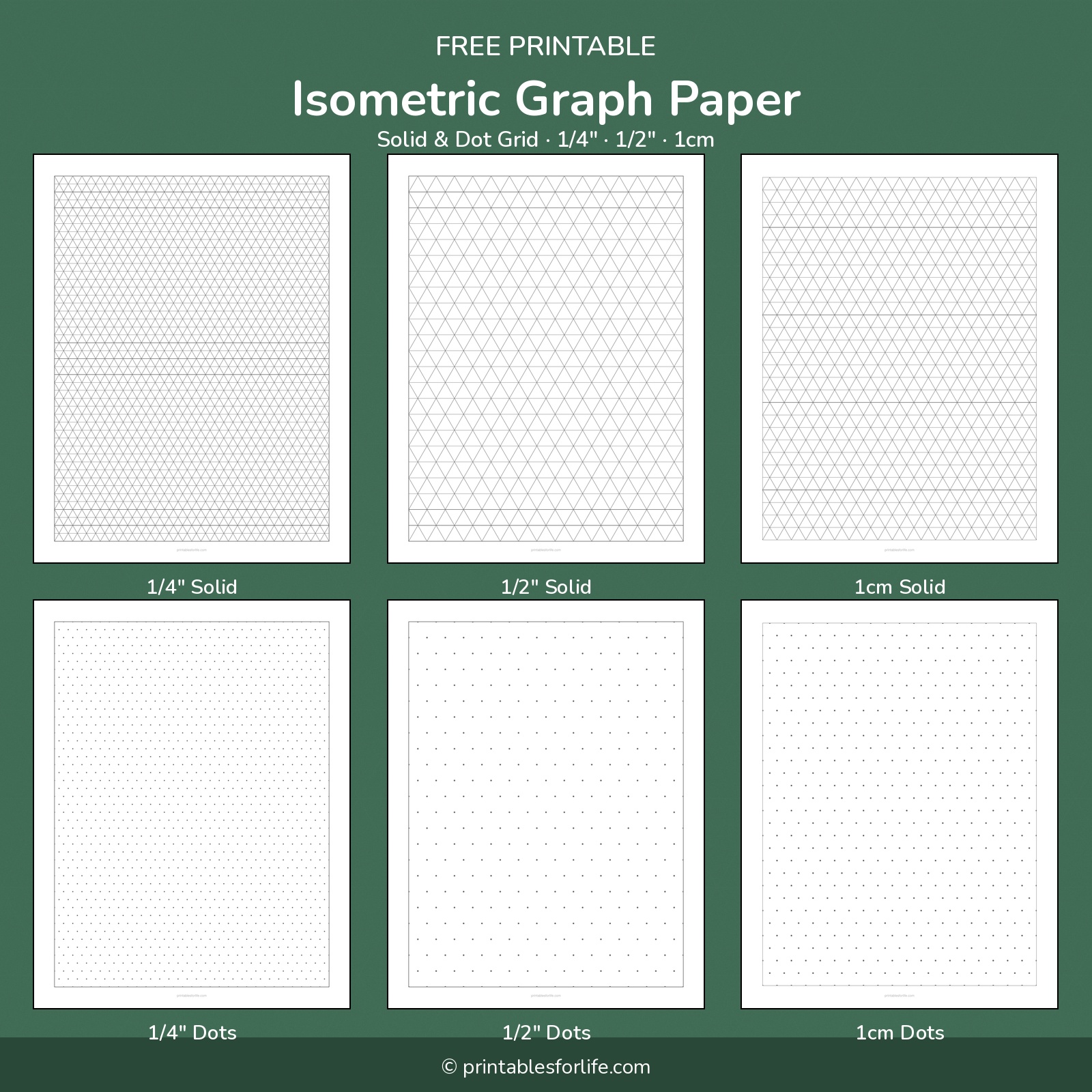
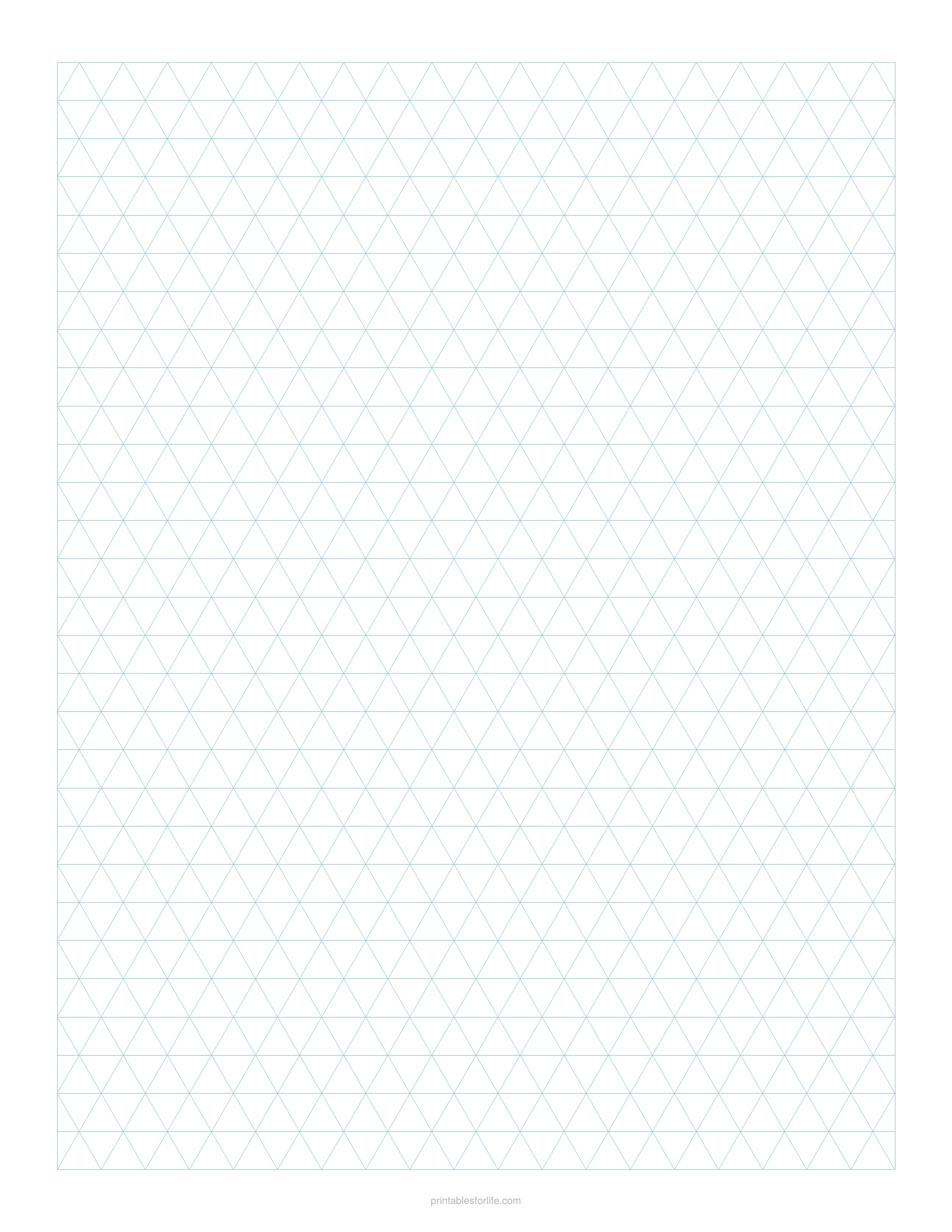
This isometric graph paper gives you the triangular grid used for 3D drawing, where three axes sit at equal angles so a cube looks like a cube instead of a flat square. It comes in solid lines or a dot grid, in three sizes, so you can pick whichever suits what you’re drawing. 📐
⭐ Need a different grid? Every style lives on the printable graph paper hub. ⭐
What’s included
Two separate downloads, each with the same three sizes in light grey and light blue:
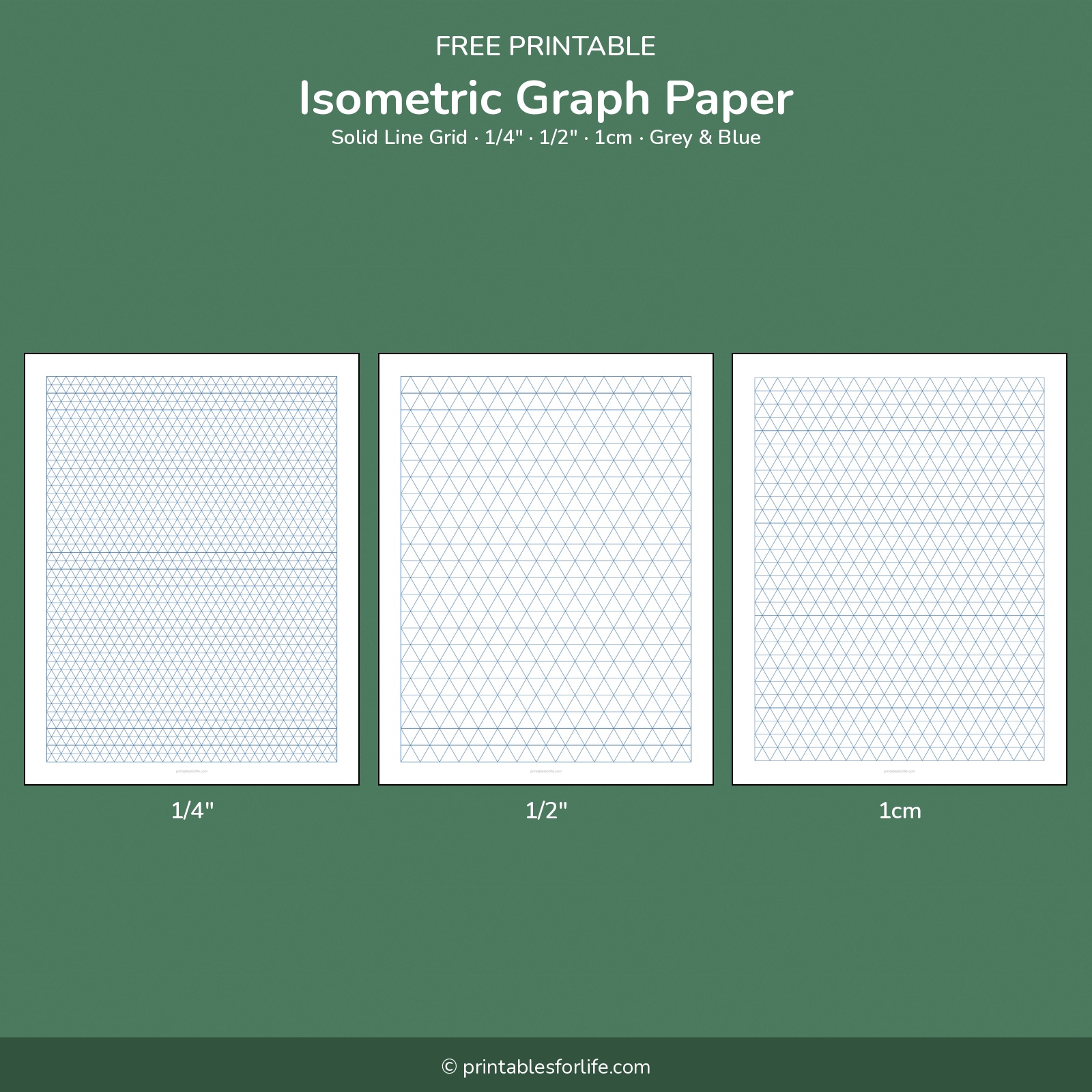
- Isometric graph paper (solid grid) — full triangular lines, 1/4″, 1/2″, and 1cm
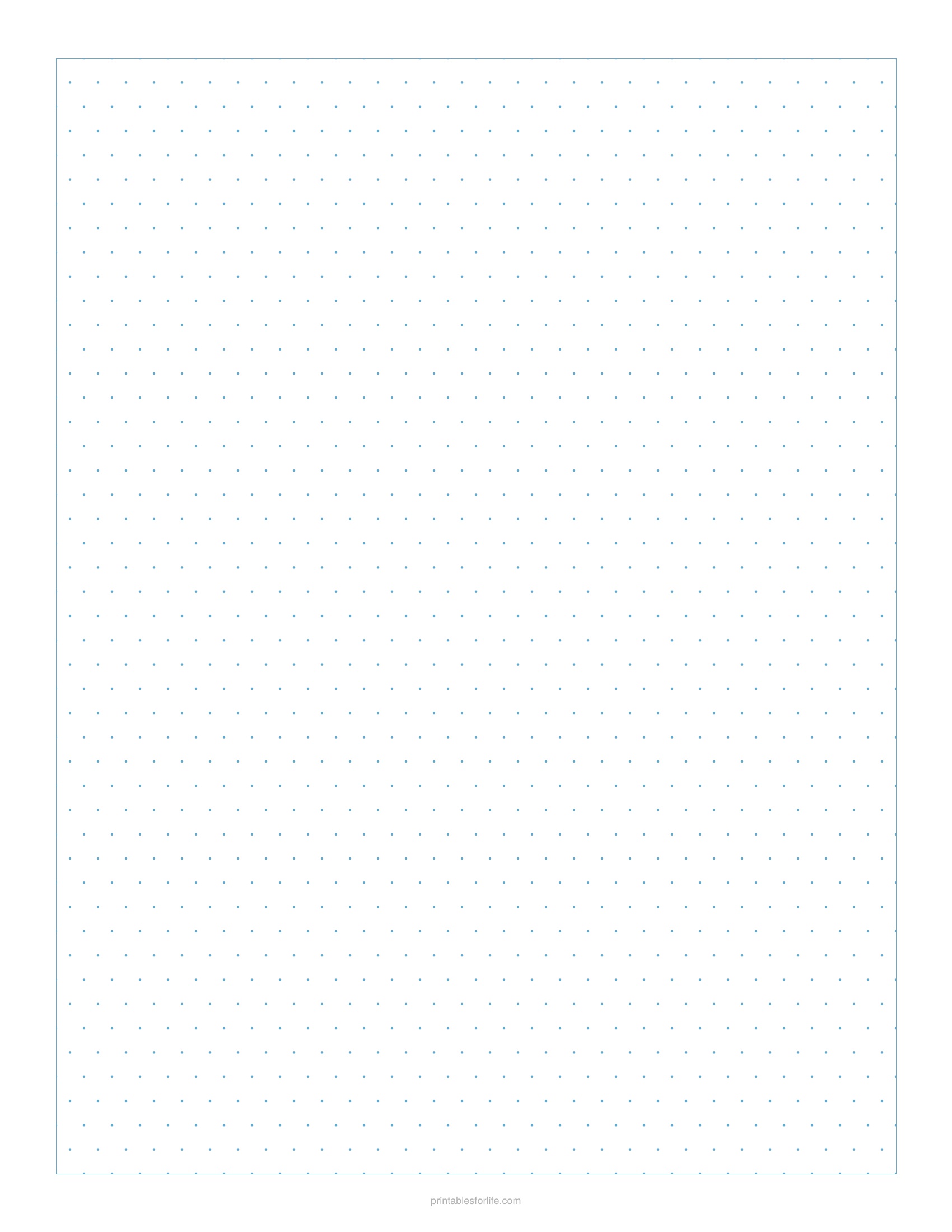
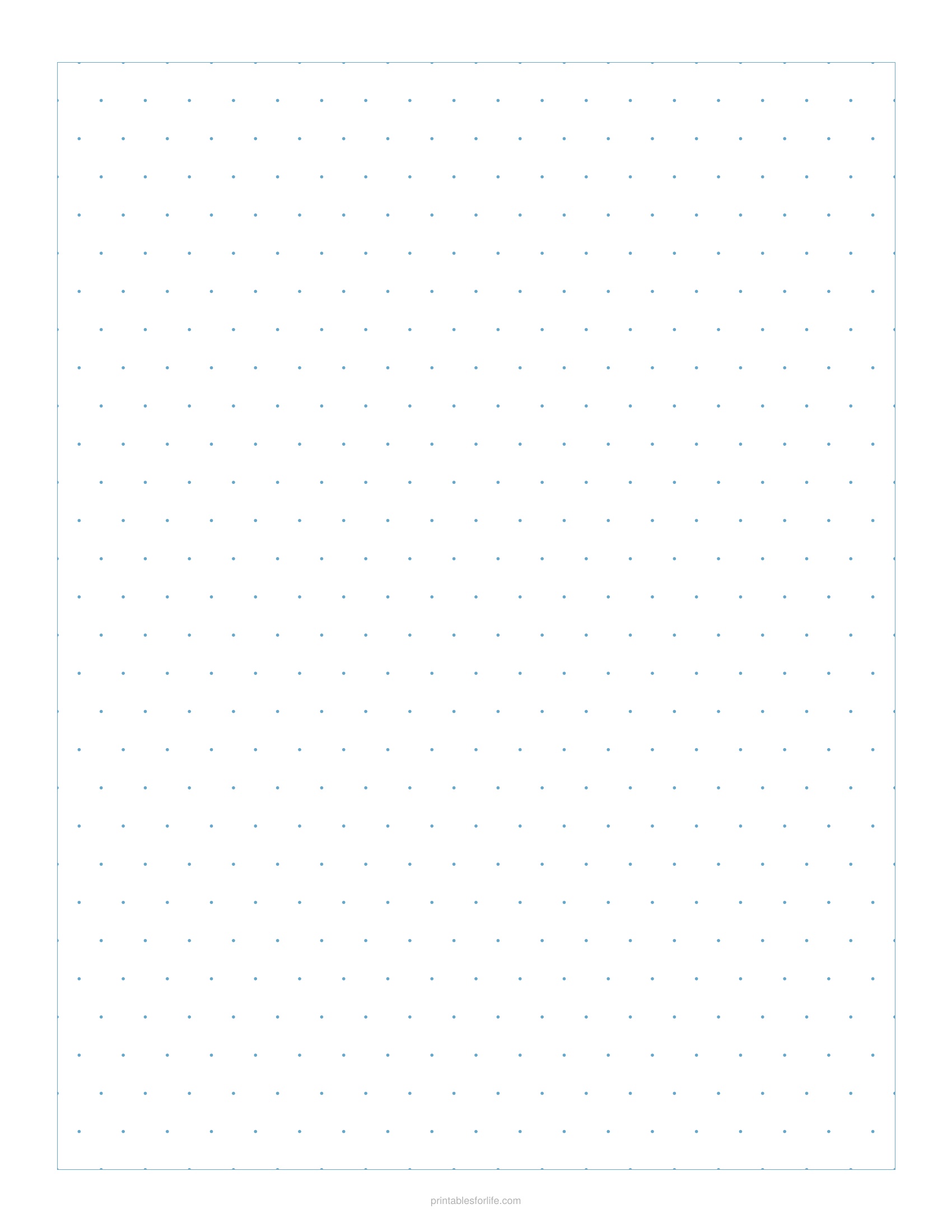
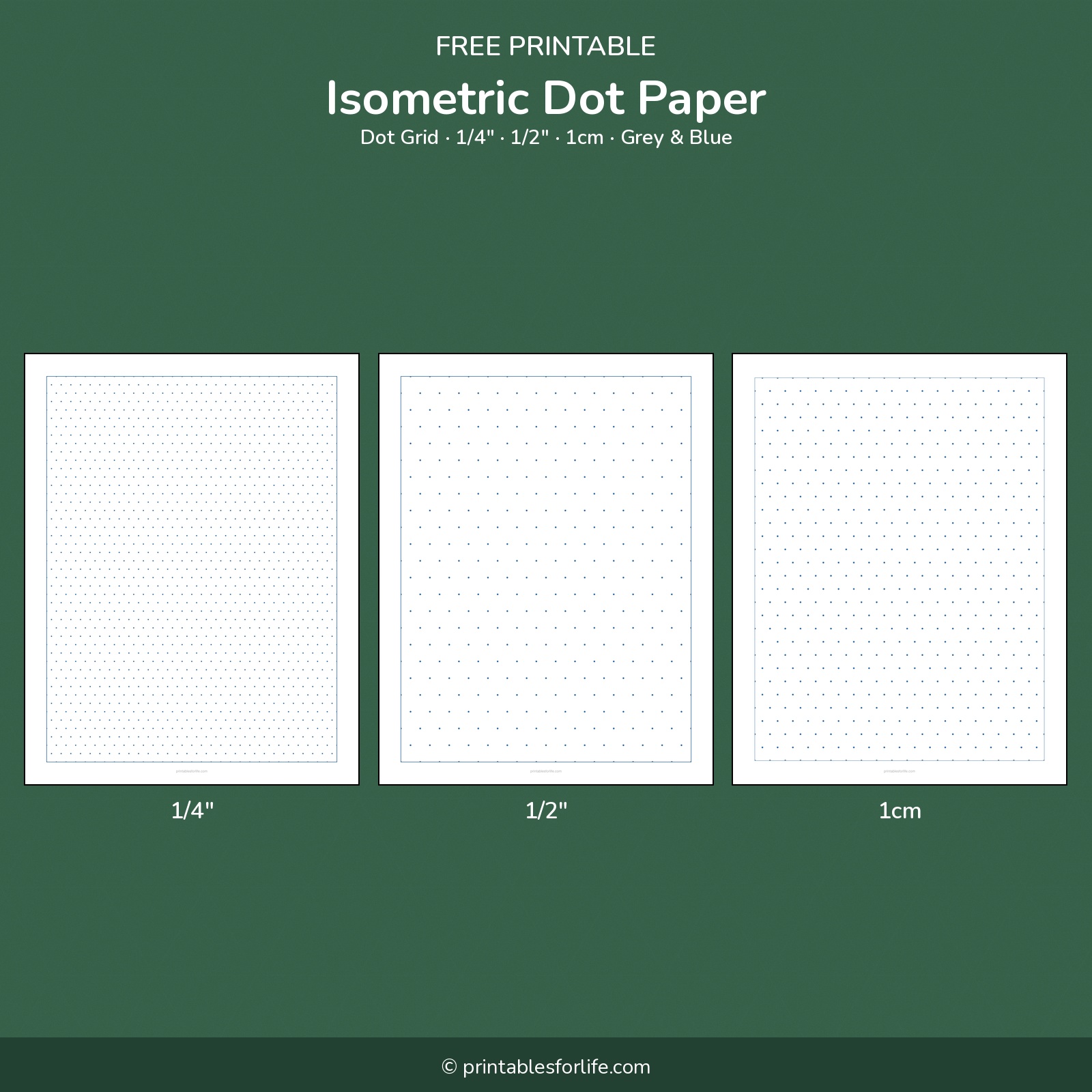
- Isometric dot paper (dot grid) — the same lattice as dots only, 1/4″, 1/2″, and 1cm
- US Letter, print-ready PDF, no watermark on the grid
Solid lines or dots — which should you pick?
Solid grid gives you every guideline, which makes it easier to keep long edges straight and to count units across a drawing. It’s the better pick when you’re learning, or when accuracy matters more than how the finished drawing looks.
Dot paper shows only the lattice points. Your drawing stands out because there are no grid lines competing with it, which is why designers and illustrators tend to prefer it. The tradeoff is that you’re eyeballing the lines between dots.
If you’re not sure, start with the solid 1/4″ grid.
THE BEES ARE BUZZING
☀️ Summer is Here! 🌴
Free Camping Bucket List (50 Fun Ideas for Families)
Ultimate Camping Packing List: Printable Checklist

Free Printable Summer Routine Checklist for Kids (Morning, Afternoon & Evening)
What is isometric drawing?
Isometric drawing is a way of showing a 3D object on flat paper without perspective distortion. Instead of lines converging toward a vanishing point the way they do in real life, the three axes stay at 120° to each other and parallel lines stay parallel. A cube drawn isometrically has all three visible faces at the same scale.
That’s the whole reason the grid exists: the triangles give you those three axes already drawn, so you’re not measuring angles by hand on every line.
Isometric vs. orthographic drawing
The two get confused constantly, and the difference is simple.
Orthographic drawings show an object in separate flat views — top, front, and side — each one straight on, each one showing true measurements. You need several views to understand the whole object.
Isometric drawings show all three dimensions in a single image. You immediately see what the object looks like, but individual faces are drawn at an angle rather than straight on.
In practice they’re used together: orthographic views for exact dimensions, an isometric view so someone can see what it actually is.
Isometric drawing practice
If you’re learning, the standard progression works well and every step fits on the grid:
- Start with a cube. Draw a vertical line for the near corner, then follow the grid lines out to each side. Three faces, all the same size. Once a cube looks right, most other shapes follow.
- Move to stacked boxes. Two or three cubes joined together teaches you to track which edges are hidden.
- Draw a simple house. A box with a triangular prism roof — the first project where the grid saves real time.
- Try a room. Draw the floor first, then the walls up from it, then the furniture as boxes. This is where isometric drawing starts feeling genuinely useful.
- Add a circle. Circles become ellipses in isometric view. Sketch the square the circle would sit inside, then curve through the midpoints of each side.
Larger sizes (1/2″ or 1cm) are more forgiving for practice than 1/4″.
See More In:
Printable Graph Paper — Free PDF (1/4″, 1/5″, 1/8″, 1cm, 5mm)

14 Free Printable Square Templates PDF Download

15 Free Circle Template Printables PDF Download
Free Printable Color Flashcards
Free Printable Shapes Flashcards (2D Shapes)
Free Printable Math Symbol Flashcards
Free Printable Skip Counting Flashcards
Free Printable Negative Number Flashcards
Piping and plumbing isometrics
Isometric paper is standard in the trades for pipe drawings. A piping isometric shows a run of pipe in three dimensions on a single sheet, with fittings, valves, and direction changes all readable at a glance — something you can’t get from a flat plan view where vertical runs disappear.
The grid handles the hard part: pipe runs follow the three isometric axes, so each line just follows an existing grid line, and 45° offsets fall on predictable diagonals. Most people working on plumbing or pipe fitting isometrics use the 1/4″ grid, since it leaves room for fitting symbols and dimension notes without crowding.
The dot grid version is worth a look here too — with no grid lines behind them, pipe runs and annotations stay legible on a marked-up sheet.
Other ways people use it
- Engineering and product design — quick 3D concept sketches before anything goes into CAD
- Architecture — axonometric building and floor plan views
- Math class — building and drawing 3D shapes, volume, surface area, and nets
- Tabletop gaming — 3D dungeon and terrain maps
- Pixel and voxel art — planning isometric game art or Minecraft builds by hand
- Illustration and graphic design — laying out isometric illustrations before going digital
You Might Also Like
50+ Free Comic Strip Template Printable PDF (3 to 10 Panels)
14 Free Storyboard Template Printables (PDF Download)
Free Blank US Map Printable PDF: Plus 50 States, Regions & Quiz Pages

Printable Lined Paper | Free PDF (Wide, College & Narrow Ruled)
Printable Graph Paper — Free PDF (1/4″, 1/5″, 1/8″, 1cm, 5mm)
14 Free Printable Square Templates PDF Download
15 Free Circle Template Printables PDF Download
Free Printable Bubble Letters & Numbers PDF
How to use it
Print at actual size, not “fit to page” — scaling changes the triangle dimensions and throws off any measuring you do off the grid.
Work along the three axes: one vertical, two at 30° from horizontal. Every edge of a box-shaped object follows one of those three directions. Anything that doesn’t follow an axis (diagonals, curves) gets sketched between grid points by eye.
Every graph paper style in one place
- Printable graph paper — the full hub, every grid size and style
- Hexagonal graph paper for maps, chemistry, and quilting
- Polar graph paper for trig and circular graphing
- Large grid graph paper for big, bold squares
- Graph paper with numbers for coordinate plotting
- Perspective graph paper for vanishing-point drawing
- Circle dot graph paper for pattern and craft work
- Flower of life graph paper for geometric art
Download the free printable isometric graph paper PDF
📐 Pick solid lines or dots, choose your size and color, and print at home.
Isometric Graph Paper — Solid Grid
The full triangular grid in 1/4″, 1/2″, and 1cm, each in light grey and light blue. Every guideline is drawn, so it’s the easier version to learn on and the more accurate one to measure against.


Download & Print
👉 Download Isometric Graph Paper — Solid Grid (1/4″, 1/2″, 1cm, Grey & Blue)
Isometric Dot Paper — Dot Grid
The same isometric lattice shown as dots only, in the same three sizes and both colors. Cleaner finished drawings, since nothing but your own lines shows up on the page.



🦀 Summer Coloring 🏖️
From our sister site colorandtrace.com
Seashells Coloring Page
Crab Coloring Page