
The best camping memories usually aren’t the ones you planned down to the minute. They’re the firefly you chased into the dark, the first time your kid built a fire all on their own, the hot cocoa that tasted better than anything at home because you made it outside at 9 p.m. with people you love 🏕️
This camping bucket list printable is designed to help you collect more of those moments — not by packing your schedule, but by keeping a running list of things worth trying the next time you’re at a campsite.
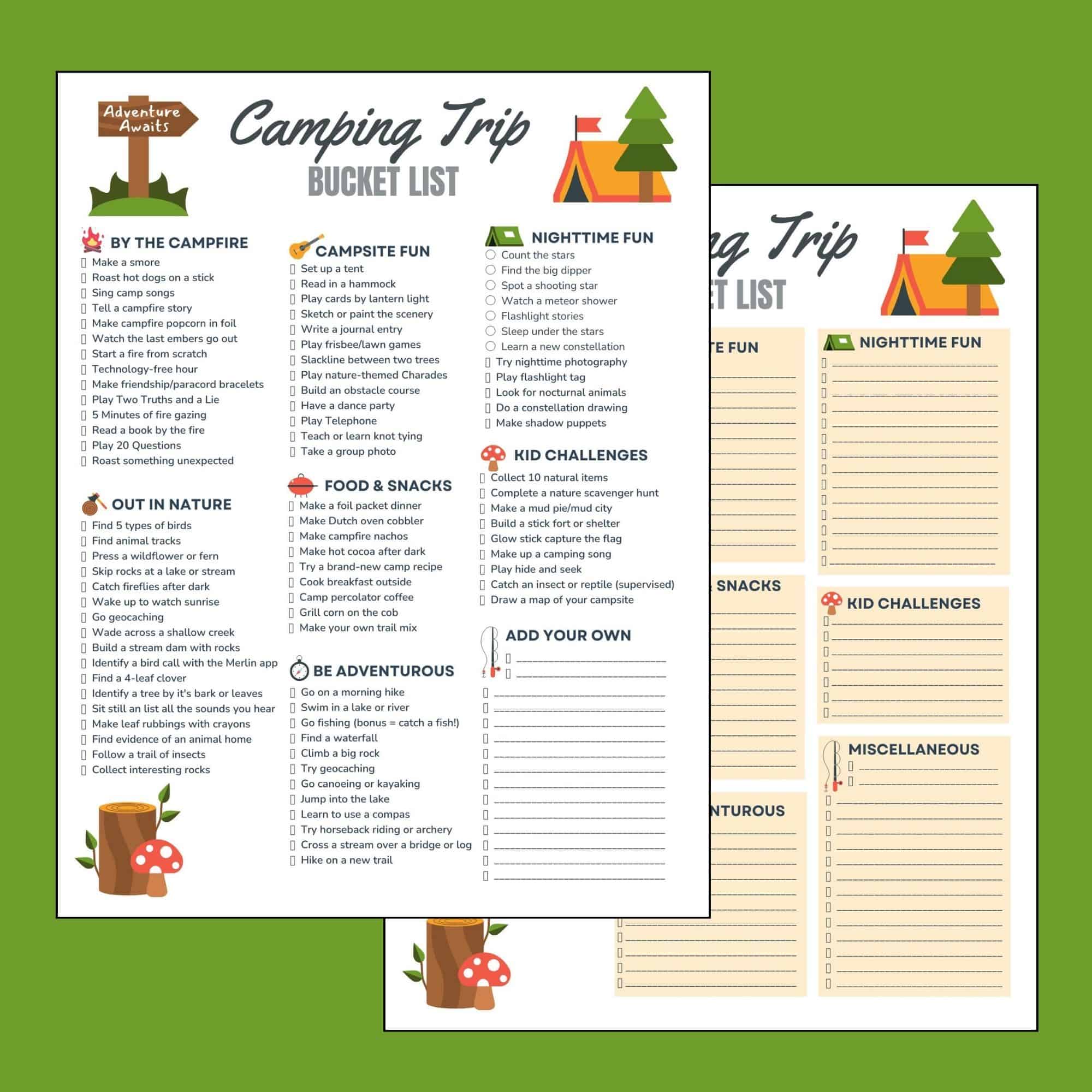
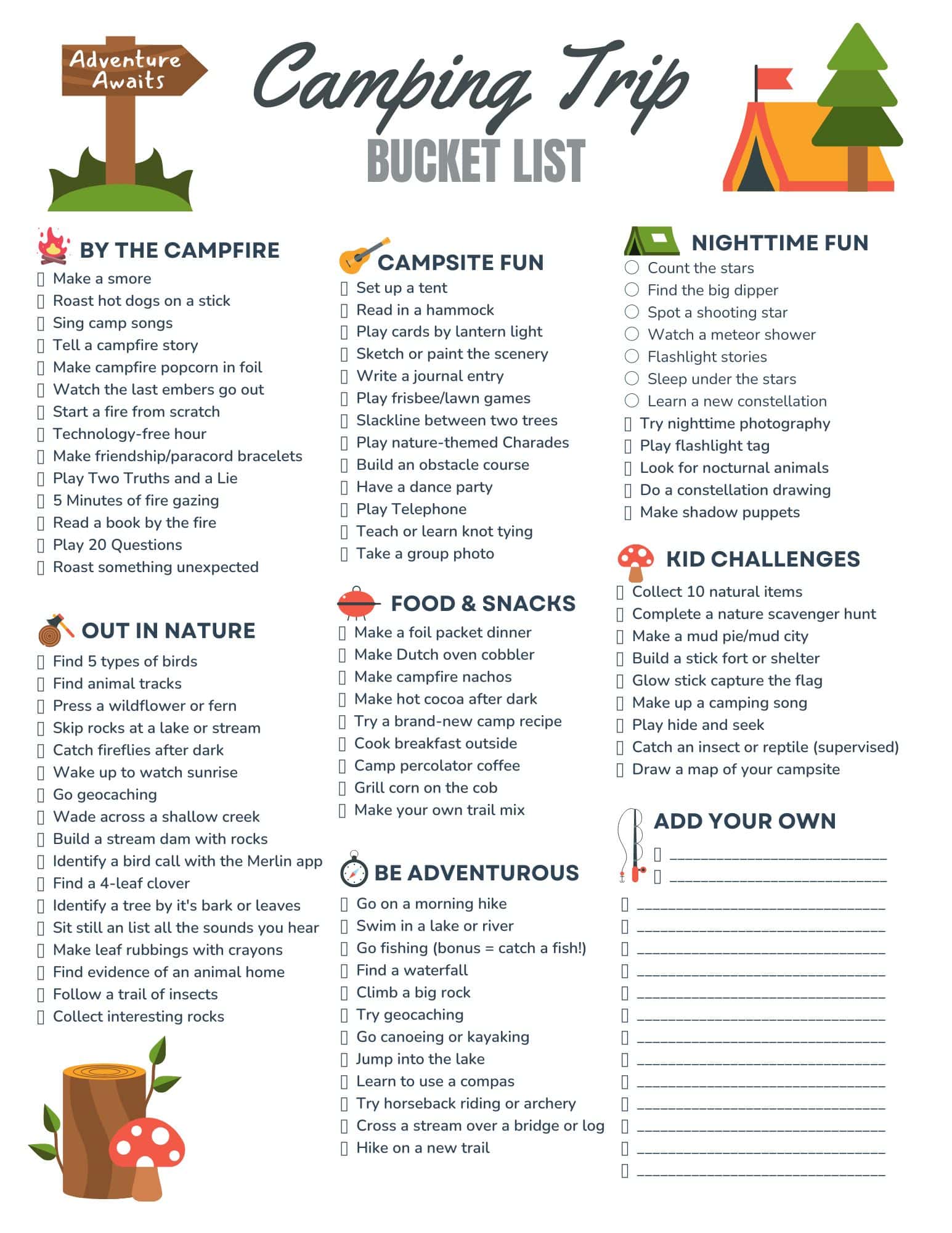
The filled version includes 50 ideas grouped into six categories:
- campfire classics
- nature moments
- outdoor adventures
- campsite fun
- food and fireside challenges
- nighttime magic
- plus a dedicated kid challenges section
The plain version gives you 50 numbered blank lines to fill in your own list. Both are instant PDF downloads with no email required. Print one before your next trip, take it to the campsite, and let the kids help decide what to tackle first.
THE BEES ARE BUZZING
☀️ Summer is Here! 🌴
Free Camping Bucket List (50 Fun Ideas for Families)
Ultimate Camping Packing List: Printable Checklist

Free Printable Summer Routine Checklist for Kids (Morning, Afternoon & Evening)
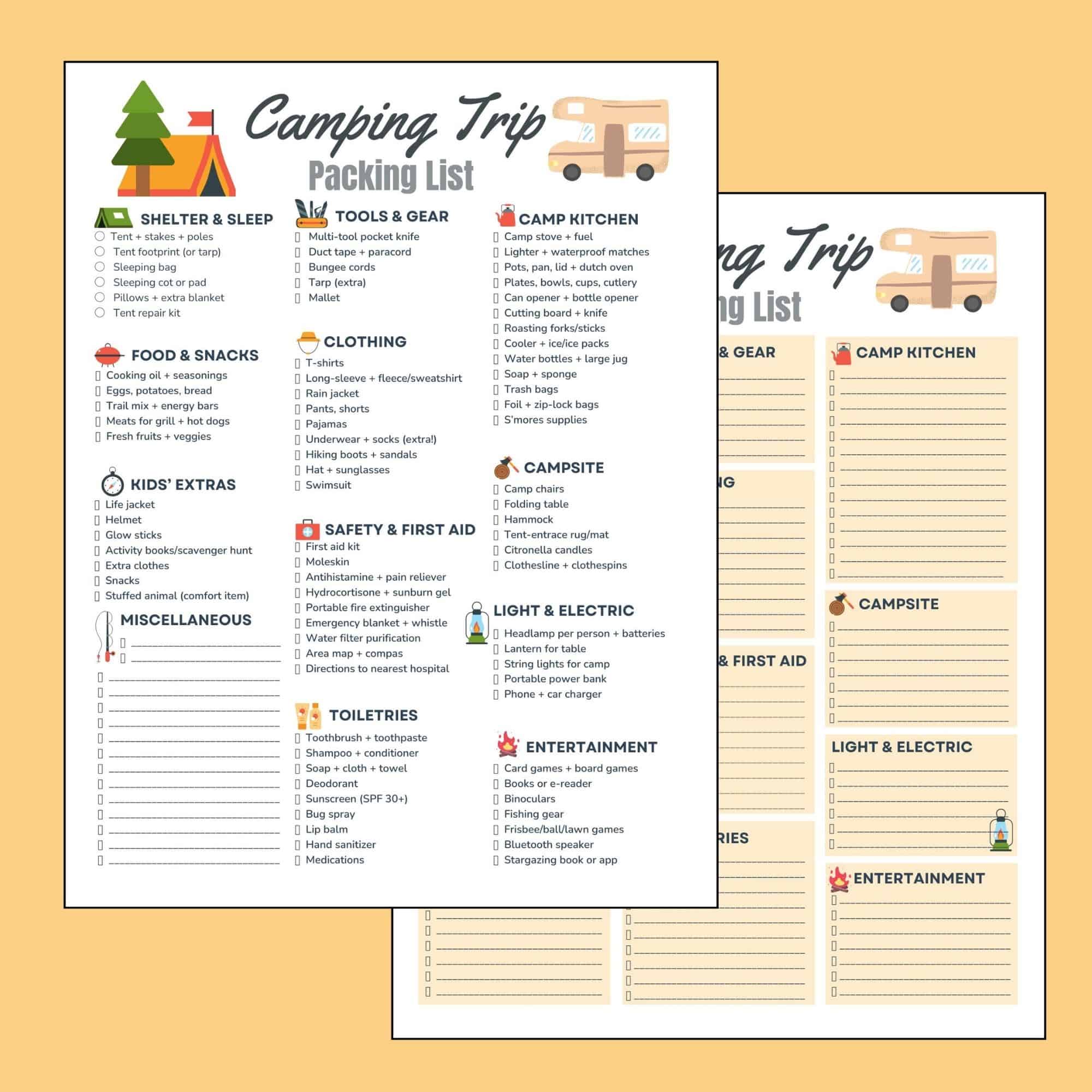
If you haven’t started planning your camping trip yet, the Camping Countdown Calendar is a great place to start — it helps the whole family track how many days are left until you leave. And once camping is on the calendar, the Camping Packing List will make sure you actually arrive with everything you need.
For the bigger picture of your whole summer, the Summer Bucket List is the all-in-one version of this idea — 50 family activities for the whole season, camping included.
By the Campfire
No camping bucket list is complete without the campfire items — these are the moments that define a camping trip for most families and the ones kids talk about for weeks afterward. S’mores might seem obvious, but there’s an art to the perfectly golden marshmallow that most people never quite nail, and it’s genuinely satisfying when someone in your group figures it out.
- Make s’mores (work on the perfect golden marshmallow — not burnt, not raw)
- Roast hot dogs on a stick
- Sing camp songs, even if nobody knows all the words
- Tell a campfire story — try a “one sentence each” round where everyone adds to it
- Make campfire popcorn in a foil packet over the coals
- Watch the last embers go out
- Start a fire from scratch using only natural materials you found on site
- Do a technology-free hour — no phones, no earbuds, just the fire and your group
- Make friendship bracelets or paracord bracelets by the fire
- Play Two Truths and a Lie with everyone in the group
- 5 minutes of fire gazing — sit quietly and watch the flames without talking
- Read a book by the fire — or read aloud to the group
- Play 20 Questions — no phones, no looking anything up
- Roast something unexpected on a stick — try peach halves, a Starburst, or a slice of pound cake
- Host a campfire cook-off — two people make their version of the same food and the group votes
- Make a group list of everyone’s favorite moment from the trip before you pack up to go home
Out in Nature
Camping gives you access to things that are genuinely hard to find at home: fireflies, animal tracks, wildflowers you can actually press, stars visible to the naked eye. This category is less about doing activities and more about slowing down enough to notice things. Send kids out with a list and let them report back — it works especially well if you make it a little competitive.
- Find 5 types of birds and try to identify them (binoculars help, so does the Merlin app)
- Spot a deer, fox, bird, or other wildlife (and stay still enough for it to not run)
- Find animal tracks and figure out what made them
- Press a wildflower or fern between two pieces of paper
- Skip rocks at a stream or lake
- Catch fireflies after dark (and let them go)
- Listen to frogs or crickets and try to locate them
- Wake up for sunrise — even if it’s hard to get out of the sleeping bag
- Find a four-leaf clover — give it 10 genuine minutes; it’s more satisfying than it should be
- Identify a tree by its bark or leaf shape using a field guide or a plant ID app like iNaturalist
- Sit completely still in one spot for 5 minutes and list every single sound you can hear
- Make leaf rubbings — lay a leaf under paper and rub a crayon or pencil across it
- Find evidence of an animal home — a burrow, a bird’s nest, or a hollow log
- Follow a trail of ants or insects and see where it leads
- Collect interesting rocks and look them up when you get home to identify what they are
- Find the highest point visible from camp and hike to it, even if it’s just a small hill
Be Adventurous
These are the activities that get everyone moving — hiking, swimming, fishing, climbing. Not every campground offers all of these, so look at your specific site before you leave home and identify which ones are actually available. A morning hike is almost always doable and almost always worth it, even with reluctant participants who need to be bribed with snacks.
- Go on a morning hike before the heat of the day sets in
- Swim in a lake or river (life jackets for kids near any open water)
- Go fishing — even if you catch nothing, it still counts
- Ride bikes around the campground or on a trail
- Find a waterfall (search the area on AllTrails or a local trail guide before you go)
- Climb a big rock and take a photo from the top
- Go canoeing, kayaking, or paddleboarding if rentals are nearby
- Try geocaching — it’s like a GPS treasure hunt and works at most campgrounds; search geocaching.com for caches near your site
- Go on a night hike with headlamps — everything feels different after dark
- Wade across a shallow creek or hop rocks to the other side
- Build a small dam at a stream using only rocks and sticks
- Identify a bird call using a free app like Merlin — it’s genuinely impressive when it works
- Jump into a lake from a dock, a boulder, or a rope swing
- Go on a solo walk by yourself for at least 20 minutes — no companions, just you and the trail
- Try rock scrambling — find a rocky hillside and climb without a marked trail
- Learn to use a compass to navigate a short route without relying on a phone
- Try a new outdoor activity you’ve never done — horseback riding, archery, or zip lining if there’s a facility nearby
- Do a sunrise summit — plan a hike that gets you to a viewpoint right at sunrise
- Cross a suspension bridge, log crossing, or rope bridge if there’s one on a nearby trail
- Pick a trail you’ve never hiked and go in with no reviews — just a map and a start time

Campsite Fun
Some of the best camping moments happen right at the campsite — no trail required. Setting up the tent as a family, hanging a hammock and actually reading in it, playing cards by lantern light after dark. These are also great activities for the slower middle hours of the day when kids are tired from the morning but the evening campfire is still hours away.
- Set up the tent yourself without help (a great confidence builder for kids)
- Read in a hammock for at least an hour
- Play cards by lantern light after dark
- Sketch or paint the scenery around your campsite
- Write a journal entry about the day before bed
- Play frisbee or lawn games in an open area nearby
- Try slacklining between two trees — it looks easy and is much harder than it looks
- Play nature-themed Charades — camping, animals, and outdoors only
- Build a campsite obstacle course out of sticks, rocks, rope, and whatever you have on hand
- Have a dance party to your camp playlist in the middle of the afternoon
- Play telephone (whisper down the lane) in a circle
- Teach or learn knot tying — bowline, square knot, and slip knot are great starters
- Take a group photo in the exact same spot every camping trip and compare over the years
- Host a campsite Olympics: stick throwing, pinecone toss, jumping — make up your own events
- Lie on your back and name shapes in the clouds
- Rig up a shade tarp over the picnic table and spend the hot part of the day underneath it
Food and Snacks
Camp food gets a bad reputation it doesn’t deserve. Foil packet meals are genuinely simple and delicious, campfire nachos require almost no cleanup, and hot cocoa made outside over a fire tastes categorically better than the same cocoa made in a kitchen. This category is partly about food and partly about the experience of making it — which is usually where the good memories actually live.
- Make a foil packet meal over the coals (try chicken + veggies, or a breakfast burrito)
- Make campfire nachos: chips + cheese in foil, tucked into the coals for a few minutes
- Make hot cocoa around the fire after dark
- Try one brand-new camp recipe you’ve never made before
- Toast a marshmallow to perfect golden brown without burning it
- Eat breakfast outside — even just cereal at a picnic table counts
- Make a Dutch oven cobbler or campfire dessert over the coals — peach, berry, or chocolate work great
- Make banana boats: split a banana, stuff it with chocolate chips and mini marshmallows, wrap in foil, and cook over coals until melted
- Cook a complete camp meal where every person in the group has an assigned job — even the youngest
- Try camp coffee made in a percolator over the fire (even non-coffee-drinkers usually admit it smells amazing)
- Make campfire cinnamon rolls — twist crescent roll dough around a long stick and hold it over the flames, rotating slowly
- Set up a s’mores bar with variations: Reese’s cup instead of chocolate, Oreos instead of graham crackers, or caramel drizzle on top
- Grill corn on the cob directly on the grate until it chars and caramelizes — add butter and salt and eat it right off the cob
- Make camp pancakes and let everyone decorate their own with berries, chocolate chips, and syrup
- Make “hobo stew” — everyone adds one ingredient to the pot with no recipe and see what you get
- Build your own trail mix from scratch at camp — lay out the options and let each person customize their bag
- Make camp quesadillas in foil over the coals — cheese + whatever fillings you have on hand
- Eat one full meal with no plates — straight from the foil or the pot, fewer dishes on purpose
Free Thankful Turkey Craft: Turkey Feathers Template PDF Download
Free Fall Bingo Printable PDF (38 Pages of Cozy Autumn Fun) 🍂
Free Printable Thanksgiving Scavenger Hunt for Kids PDF
Disguise a Turkey Template | Free Printable PDF (Blank + 20 Costume Ideas)
Free Thanksgiving Bingo Printable (38 Page PDF Download) 🦃
Ghost Template Printable | Free PDF (Large, Small & Full Page)
Free Halloween Flashcards Printable PDF (With and Without Words!)
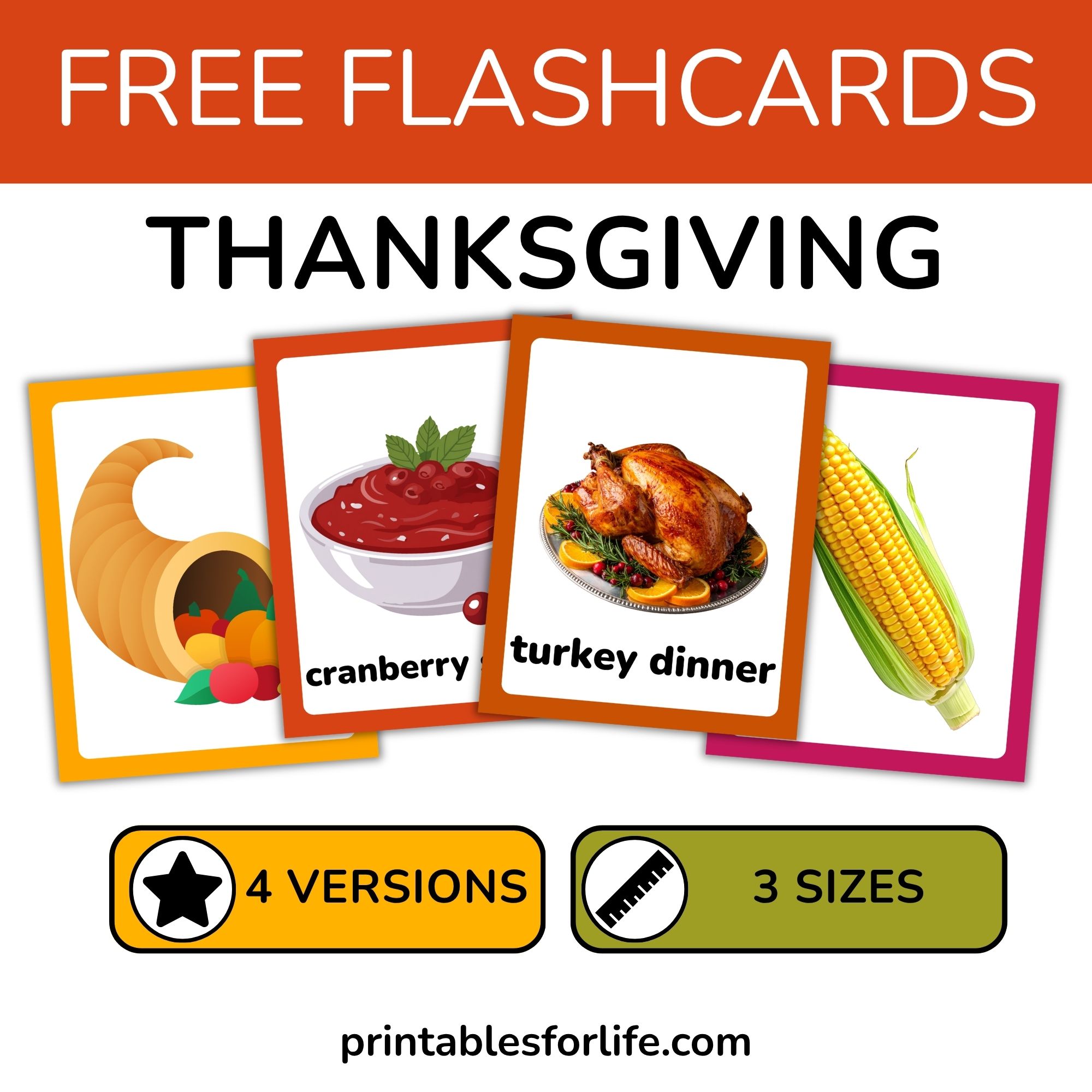
Free Thanksgiving Flashcards Printable PDF (+ Realistic Pictures)
Nighttime Fun
The nighttime at a campsite — especially away from city lights — is genuinely different from anything kids experience at home, and it’s worth staying up a little later to take it in. The sky looks different. Sounds you can’t identify come out of the woods. Everything feels a little larger. Let this category be an excuse to stay outside past the usual bedtime.
- Count the stars (or just try to — you can’t actually count them all, which is the point)
- Find the Big Dipper, Little Dipper, or another constellation
- Look for a shooting star (give it at least 15 minutes of real patience)
- Tell shadow stories using a flashlight against the tent wall
- Stay up at least an hour past your normal bedtime on purpose
- Sleep with the tent window or door screen open so you can hear the night sounds
- Watch a meteor shower — check the calendar before your trip and plan around a known event like the Perseids in August
- Sleep outside with no tent — just a sleeping bag under the stars (check the weather forecast first)
- Stay up late enough to see the Milky Way if you’re away from city lights — it takes about 20 minutes for your eyes to fully adjust
- Learn one constellation you’ve never found before and teach it to someone else in your group
- Try night photography — use your phone’s night mode or Pro mode to capture the stars or the glow of the fire
- Play a “night creature sounds” game — one person makes an animal sound, the others guess what it is
- Take a silent walk in the dark and count how many different sounds you can identify
- Play flashlight tag — classic, chaotic, and works for all ages
- Look for nocturnal animals — raccoons, owls, bats, and moths are most active between 9pm and midnight
- Do a constellation drawing challenge — each person sketches the stars they see, then compare your maps
- Make shadow puppets on the tent wall and tell a story using only your hands and a flashlight
- Sit outside alone for 10 minutes after everyone else has gone to bed
Kid Challenges
This section works well as a mini competition or a cooperative challenge — choose what fits your family’s dynamic. The “collect 10 natural items” challenge, the stick fort, and the mud pie are classics that will keep kids genuinely occupied for longer than you might expect. The last one, leave no trace, is the most important item on the whole list for building a habit that matters.
- Collect 10 natural items (rocks, feathers, pinecones, leaves — no live plants) and display them at camp
- Complete a nature scavenger hunt — bring the printable or make your own list at camp
- Make a mud pie (or mud city, or mud anything — don’t fight this one)
- Build a fort or shelter out of sticks (see how sturdy you can make it)
- Find and photograph something beautiful — then make it your phone wallpaper
- Pack out every single piece of your group’s trash: leave no trace
- Glow stick capture the flag — divide into two teams and use glow stick bracelets as the flags
- Make up a camping song as a group and perform it by the fire that night
- Play hide and seek in the woods — stay within earshot and set a boundary before you start
- Catch an insect or reptile (with adult supervision — and let it go after)
- Complete a Junior Ranger program at a national park or state park — kids earn a badge and it’s a surprisingly good time
- Whittle a marshmallow roasting stick to a perfect point using a pocket knife (with adult supervision)
- Learn to tie 3 different knots — bowline, square knot, and slip knot are good starting points
- Build the tallest free-standing stick tower you can without it tipping over
- Find and photograph 5 different insects — photos only, no catching required
- Make a camp journal from a plain notebook — decorate the cover with pressed leaves, drawings, and trip details
- Learn one plant that’s safe to touch and one to avoid in your specific camping area
- Eat something you’ve never tried before — a foraged herb, an unusual camp food, or something a friend in the group made
- Draw a map of your campsite from memory — include the fire ring, tent, path to the bathrooms, and anything interesting nearby
You Might Also Like
Free Camping Bucket List (50 Fun Ideas for Families)
Ultimate Camping Packing List: Printable Checklist
Free Printable Summer Routine Checklist for Kids (Morning, Afternoon & Evening)
Summer Routine Checklist Free Printable for Kids + Weekly Grid

Free Printable Summer Schedule Template for Kids (Daily + Weekly)
Summer Schedule Template Free Printable for Kids and Families
FREE Holiday Planner: Thanksgiving, Christmas & New Year’s 50+ Pages!

Period Tracker – Free Printable for Menstrual Cycle & Phase Tracking
Big Trip Goals
These are the items that don’t fit on a single camping weekend — they’re the longer-horizon goals that give your family something to work toward across multiple trips and seasons. Even if you only cross one of these off per year, they add up into a pretty good story of what your family has done together outside.
- Camp somewhere brand new — a site no one in your group has visited before
- Try camping in a season you’ve never done — fall and shoulder-season camping is underrated and far less crowded
- Camp in a different state or province you’ve never visited
- Try a different camping style than your usual — if you tent camp, try a cabin; if you cabin camp, try a tent under the stars
- Take someone camping who has never been before — a friend, a cousin, a neighbor
- Write a letter to your future self at the campsite and open it on your next camping trip
- Camp under a full moon and go outside specifically to watch it rise over the trees
- Visit a National Park or State Park you’ve always wanted to see in person
How to Use the Camping Bucket List
The bucket list works best when you use it across multiple trips rather than trying to check everything off on one camping weekend. The whole point is that there’s always something on it worth doing next time — it turns a camping trip into an ongoing adventure rather than a one-and-done event.
- Let kids pick before you go: share the filled list a few days before the trip and let each child circle 3–5 items they want to try; this builds buy-in and gives you a loose plan without over-scheduling
- Keep it at the campsite, not in the car: clip it to the tent, stick it in a camp chair pocket, or pin it somewhere visible so you actually reference it during downtime instead of just forgetting you brought it
- Write the date next to each item as you check it off: over multiple trips, you end up with a little diary of what you did and when — surprisingly nice to look back on
- Don’t pressure yourself to finish it: the items you don’t check off this trip become reasons to go camping again — that’s a feature, not a failure
- Use the blank version to make it your own: if you have specific traditions, inside jokes, or activities unique to your family’s camping style, the blank version lets you build a list that’s entirely yours
Download & Print
Download the camping bucket list now and start checking off those campfire dreams today!
More Free Camping & Summer Printables
- Camping Packing List: 8-category packing checklist with a kids’ extras section — plain and pre-filled versions available
- Camping Countdown Calendar: count down the days until your camping trip with the whole family
- Summer Bucket List: a full-summer version of this idea with 50 family-friendly activities for the whole season
- Nature Scavenger Hunt: a printable scavenger hunt that’s perfect for taking on a nature walk or hike at the campground
- Beach Packing List: same format as the camping packing list, for beach trips and beach camping
- Summer Planner: plan your camping trips, beach days, and summer activities across May through August
🦀 Summer Coloring 🏖️
From our sister site colorandtrace.com
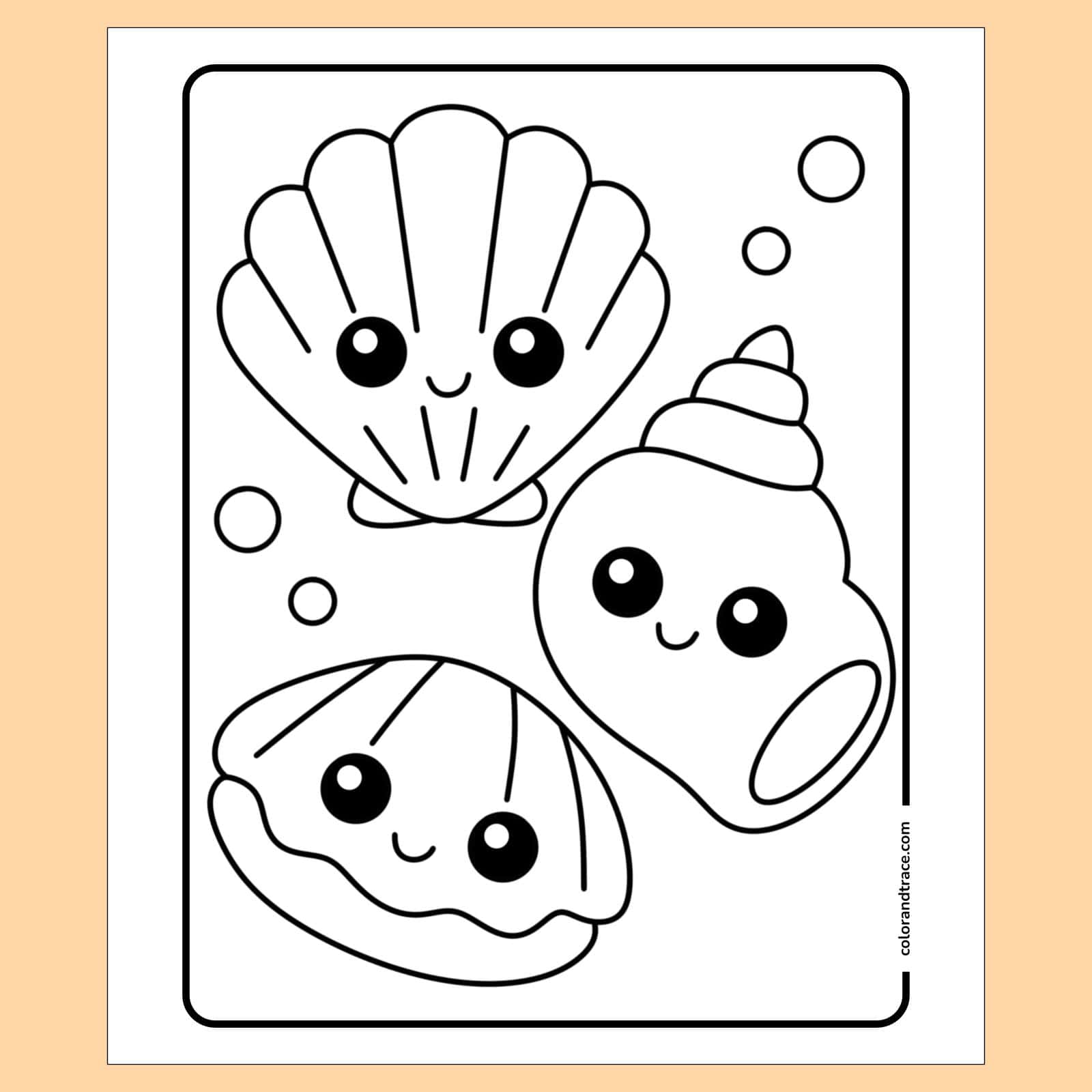
Seashells Coloring Page
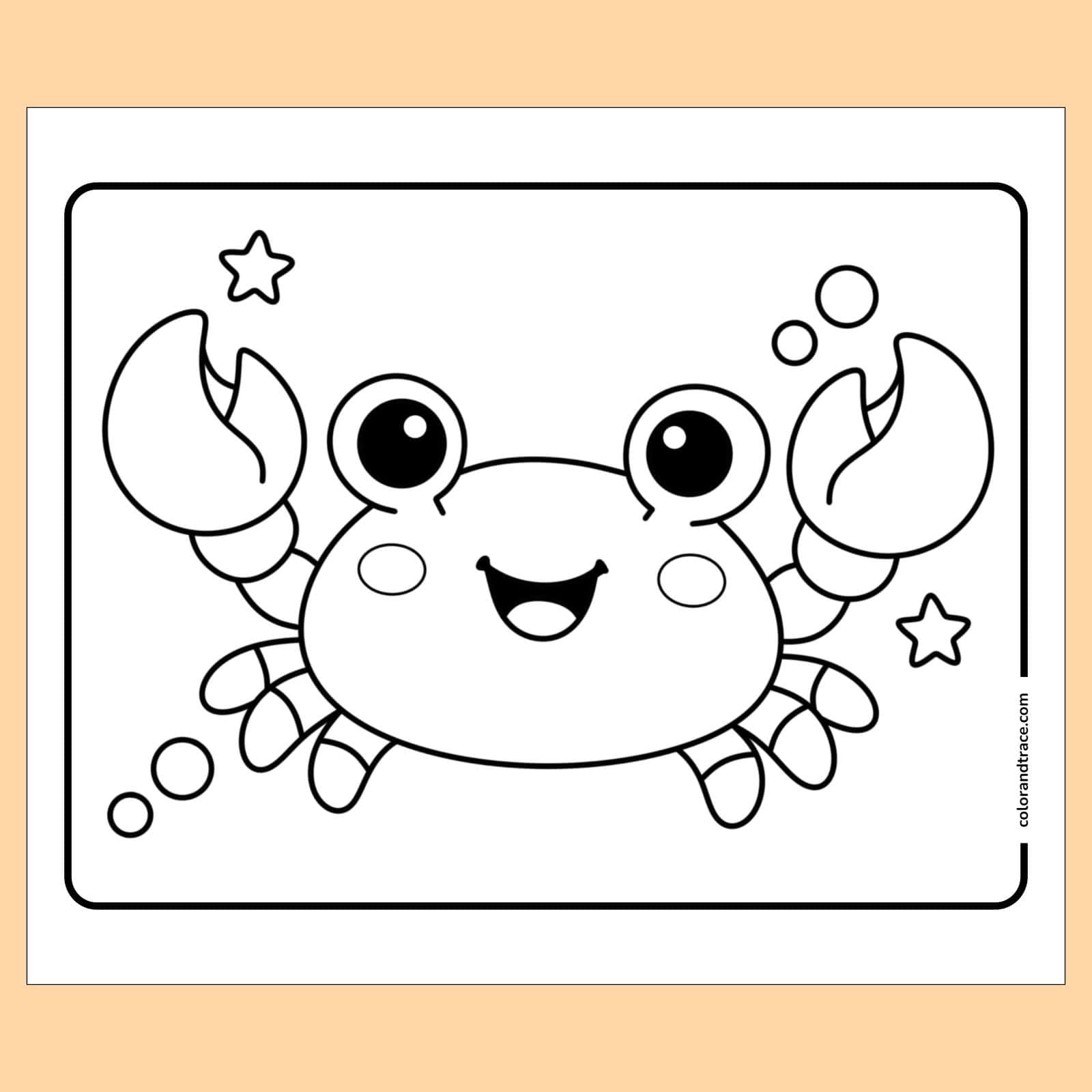
Crab Coloring Page
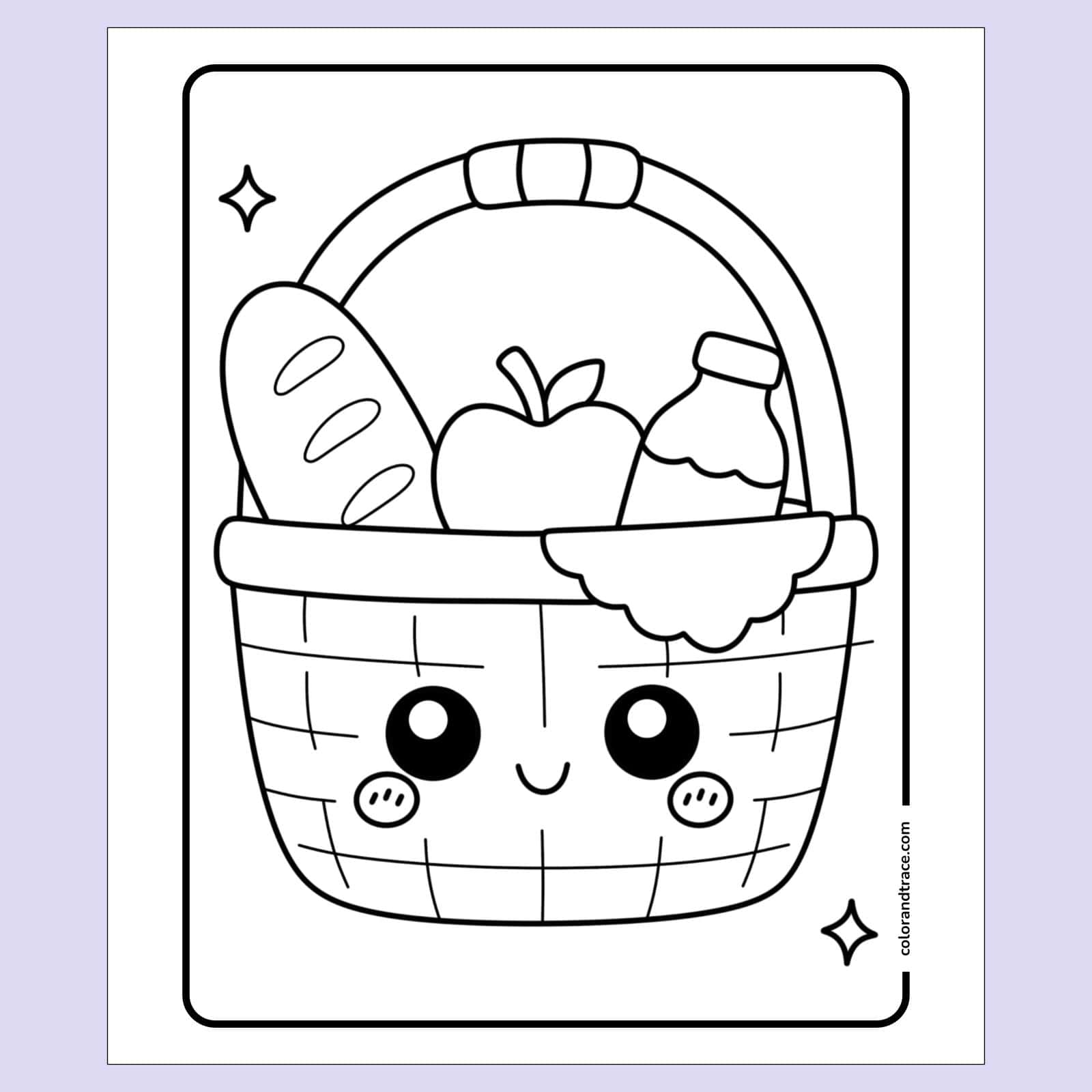
Picnic Basket Coloring Page
Frequently Asked Questions
What should be on a camping bucket list?
A camping bucket list works best when it mixes active adventures (hiking, swimming, fishing) with quieter moments (stargazing, reading in a hammock, journaling by the fire) and things that are genuinely silly and kid-friendly (building a fort out of sticks, making a mud pie). The goal is a list that gives everyone in the group something to look forward to, not just a checklist of outdoor feats.
How many items should be on a camping bucket list?
Enough that you can’t finish it in one trip — which is the whole point. This printable includes 50 items so there’s always something left to do next time. On a typical 3-day camping weekend, most families realistically accomplish 8–15 items. That’s perfect: it means the list is still waiting for you on the next trip.
Is this bucket list appropriate for kids?
Yes. The filled version is built with families in mind — the ideas range from toddler-friendly (mud pies, glow sticks, firefly catching) to things older kids and teens can take on independently (starting a fire, navigating a trail, cooking a foil packet meal). There’s also a dedicated “kid challenges” section at the bottom of the list.
How do I make camping more fun for kids?
Give them ownership over some of the decisions. Let them pick 3–5 items from the bucket list before the trip, let them help set up the tent, and give them their own headlamp and their own small backpack for hikes. Kids who feel like active participants in a camping trip rather than passengers tend to have a significantly better time — and create significantly fewer “I’m bored” moments around camp.
What’s the difference between the plain and filled versions?
The plain version gives you 50 numbered blank lines to write in your own bucket list items. The filled version has all 50 ideas from the article already printed, organized by category, with 5 extra blank lines for additions. If you want to use your own ideas entirely, go plain. If you want a ready-made starting point, grab the filled version and cross out or add anything that doesn’t fit your family.
Can I use this bucket list on more than one camping trip?
Absolutely. Print a fresh copy for each trip and write the trip name and date at the bottom so you have a record of which items you did when. Or laminate one copy and use a dry-erase marker so you can reset it for each trip. Either way works well.
Is this camping bucket list free?
Yes. Both the plain and filled versions are completely free to download and print. No email signup, no account required. Click the Download button above either version to get the PDF.