
Grab this free zero based budget template to plan your money with confidence. This simple budget planner template helps you give every dollar a job and track it.
Print it, fill it in, and balance to zero. ✨
Planning by payday too? Grab a paycheck budgeting sheet to complement this page.
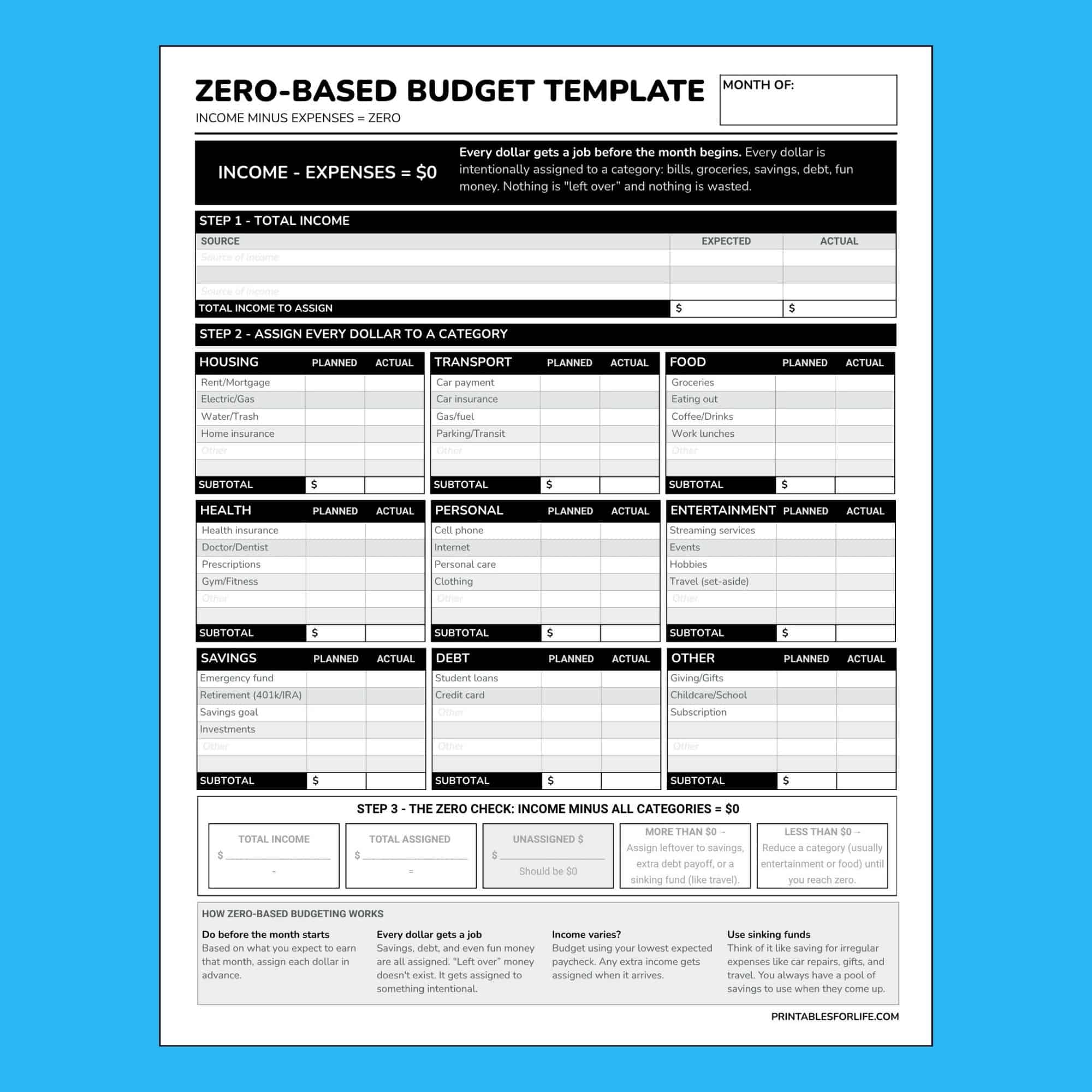
This is a single-page zero based budget worksheet with income and category tables and a three-column planned actual subtotal grid.
If you are asking what is zero based budgeting? It means assigning every dollar you expect to earn from a paycheck before payday. This page keeps it simple with a clear zero based budget example to allocate income to categories and track planned versus actual.
For extra structure, pair it with a monthly budget or try envelopes using the cash envelope budget method.
Use it as your budget tracker and money tracker template to guide financial decisions, set financial goals, and plan long term and long-term savings.
Compared to traditional budgeting, this budgeting method offers clarity and control, highlighting advantages of zero-based budgeting, while disadvantages of zero-based budgeting can include time and category detail.
Round it out with companion resources like a savings tracker and a debt tracker for debt repayments and debt payoff printables. 👍
What’s included
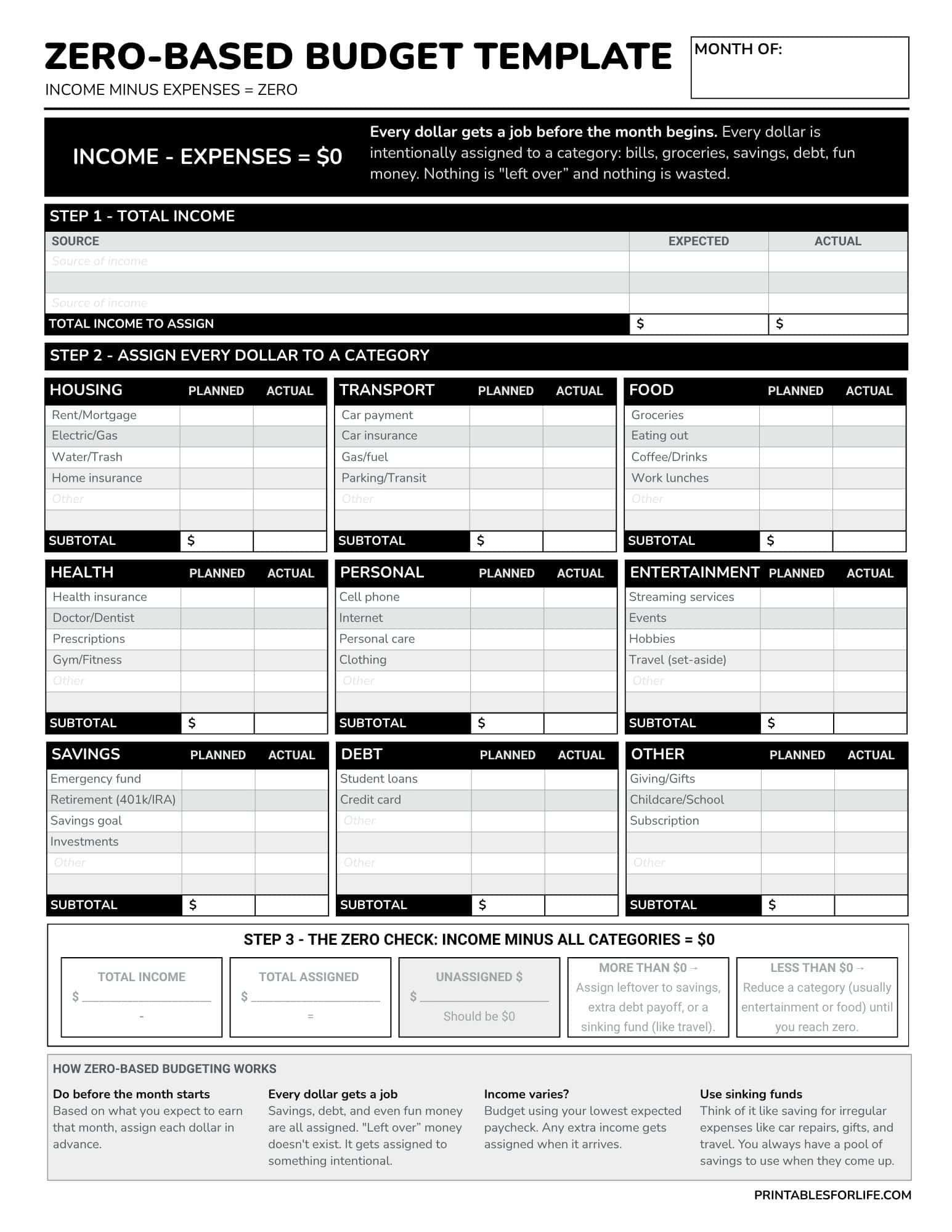
- Header with space for month and total monthly income
- Income section with lines for sources and amounts
- Category tables with planned, actual, and subtotal columns
- Instructional footer guidance for balancing to zero
- A4 single-page black-and-white minimal layout
Features
- Single-page worksheet
- Minimal monochrome style
- Three-column planned actual subtotal tables
- Income and category tables for clarity
- Instructional footer guidance
- Built-in budget flexibility
Who it’s for
- Households and young professionals who want a clear plan for each paycheck and each monthly expense.
- Anyone setting financial goals and building an emergency fund with a simple, printable layout.
- People who want budgeting for beginners and a no-fuss page they can fill in quickly.
- Savers focusing on long-term savings while keeping steady debt repayments.
- Folks who prefer pen-and-paper resources they can keep visible on a fridge or clipboard.
How to use it
- Write your total monthly income for the month or by paycheck so you know exactly what you can allocate.
- List fixed bills in budget categories like rent or mortgage, utilities, and subscriptions so essentials are covered first.
- Add variable expenses such as groceries and entertainment to capture day-to-day spending categories.
- Assign amounts to each category, include your savings goal and emergency fund, and plan for any debt repayments.
- Record actuals through the month, compare planned versus actual, and make small tweaks with budget flexibility.
- Reconcile subtotals and confirm every dollar is assigned so your ending balance equals zero.
Planning tips
- Print two copies: one for planning and one for final numbers you want to keep.
- Color-code fixed bills and variable expenses to spot patterns fast.
- Schedule a 10-minute weekly check-in to record actuals and receipts.
- Clip this page with last month’s page to compare trends and adjust categories.
Related posts
Want to zoom into shorter time frames? Try a simple weekly budget. For spending check-ins, use a weekly expense tracker or go day by day with a daily expense tracker. If bills trip you up, organize due dates with a handy monthly bill tracker. 📅
You Might Also Like

Free 4th of July Signs | Patriotic PDF
Free Zero Based Budget Template Printable Worksheet
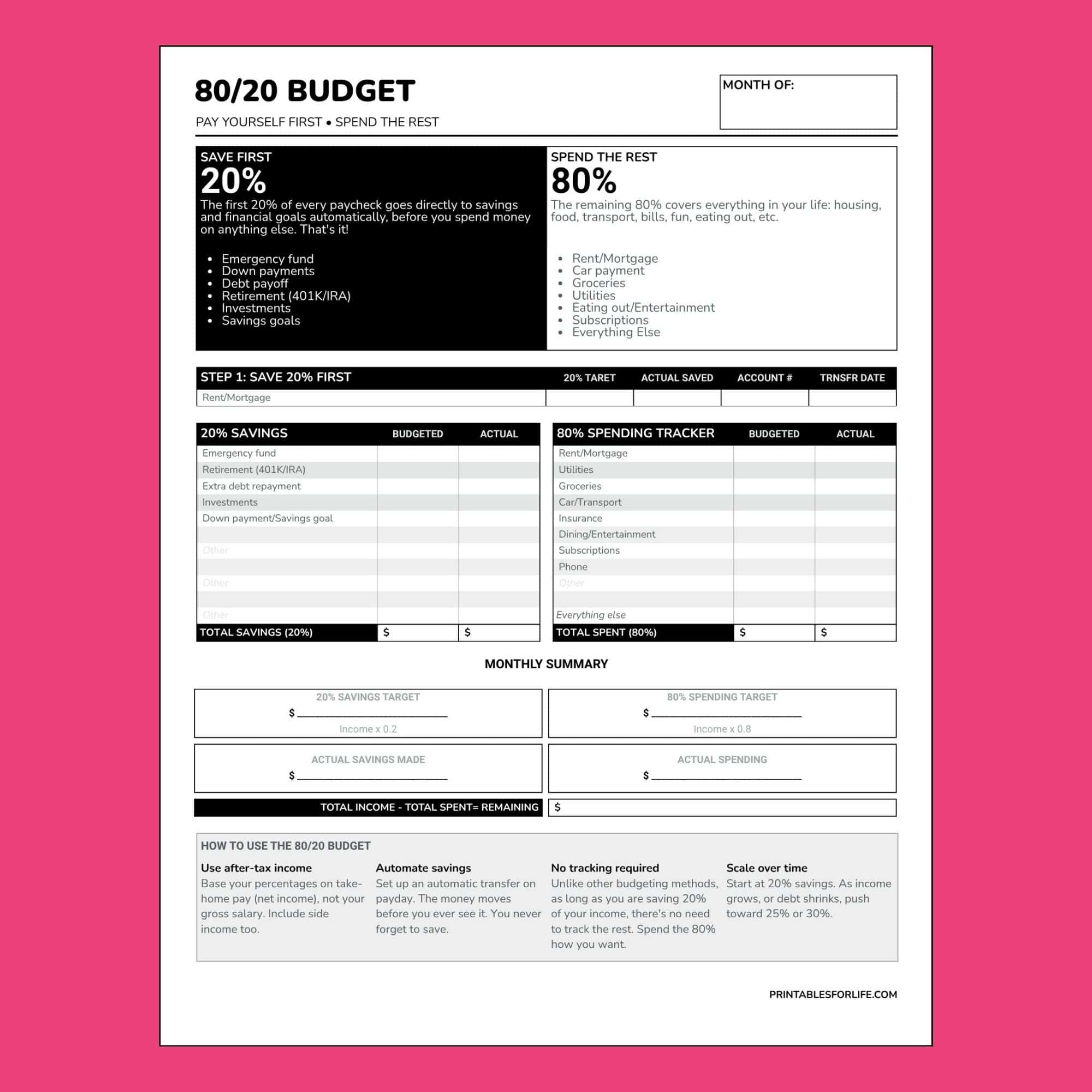
80/20 Budget Template: One-Page Worksheet to Save 20%
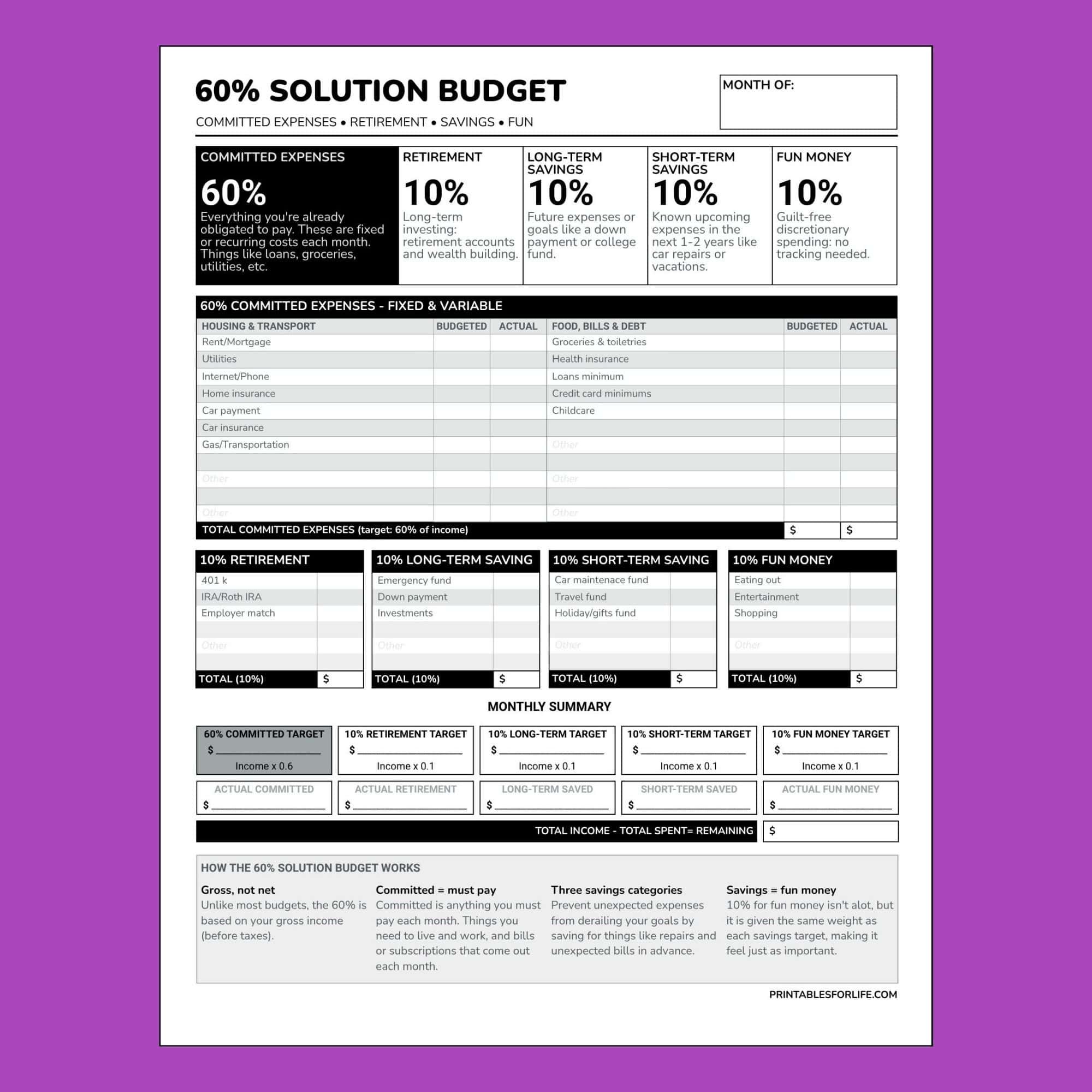
60% Solution Budget Template Printable | Simple Monthly Worksheet
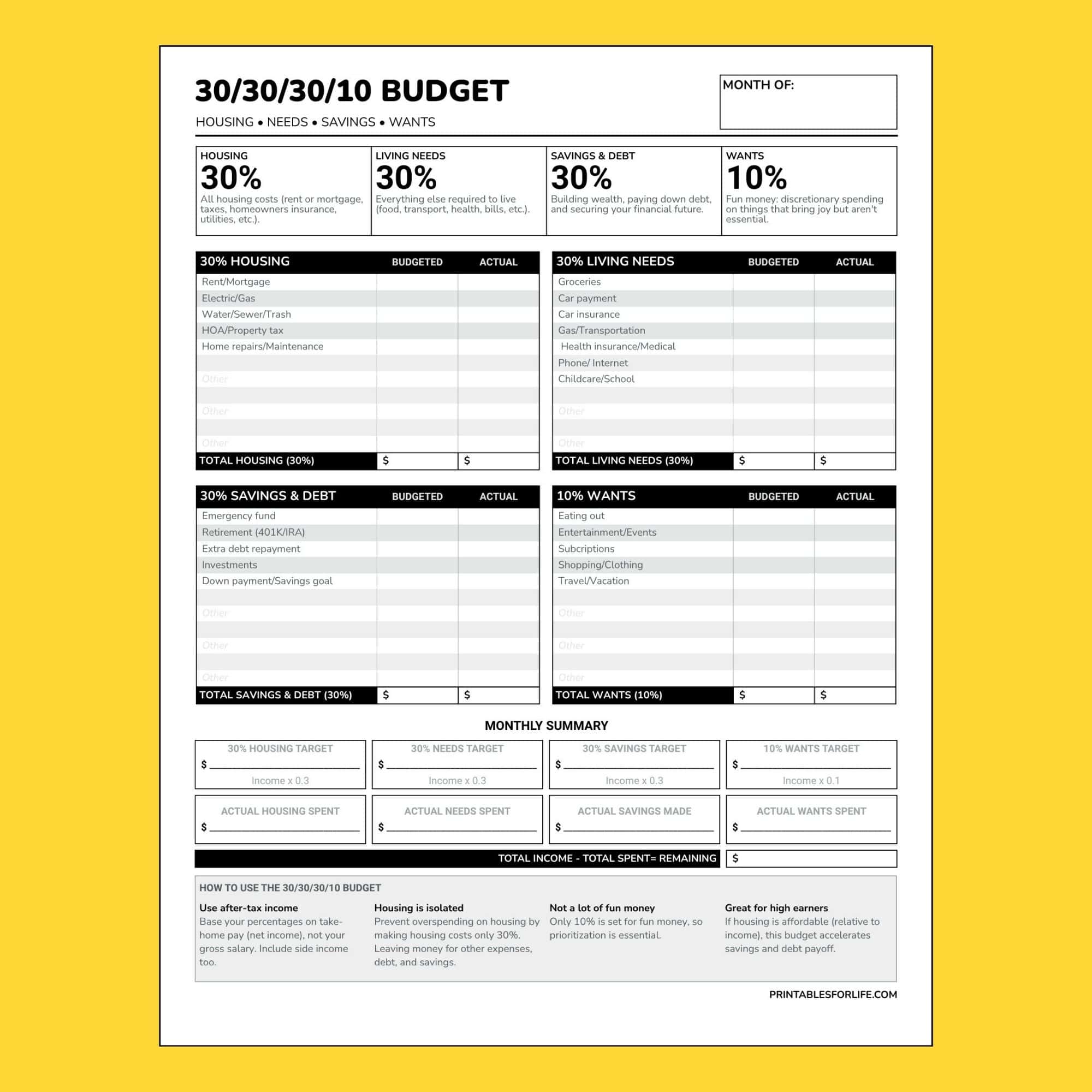
Free 30-30-30-10 Budget Template: One-Page Monthly Worksheet
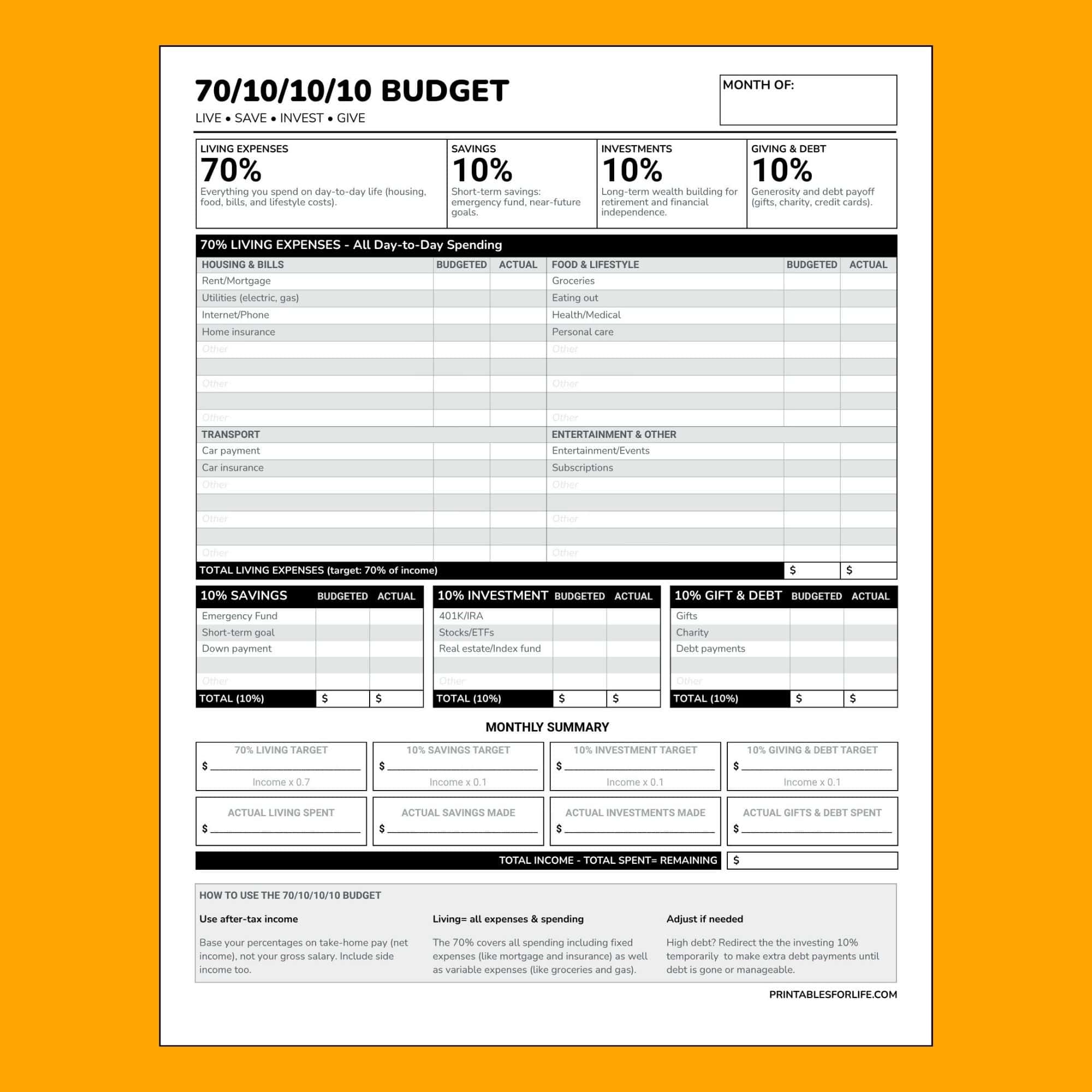
70-10-10-10 Budget Template Printable PDF
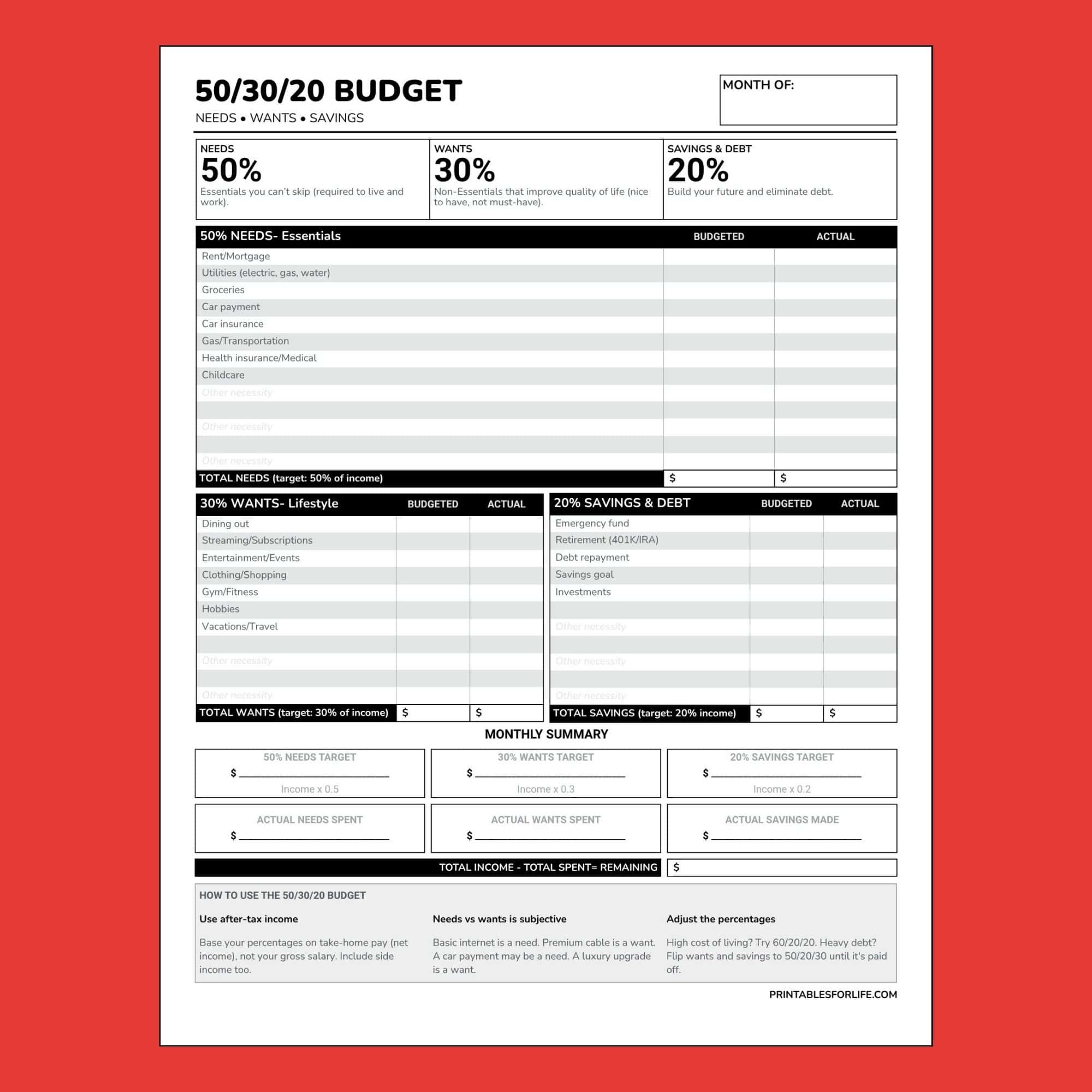
Best 50-30-20 Budget Template for Beginners: Free Printable Worksheet
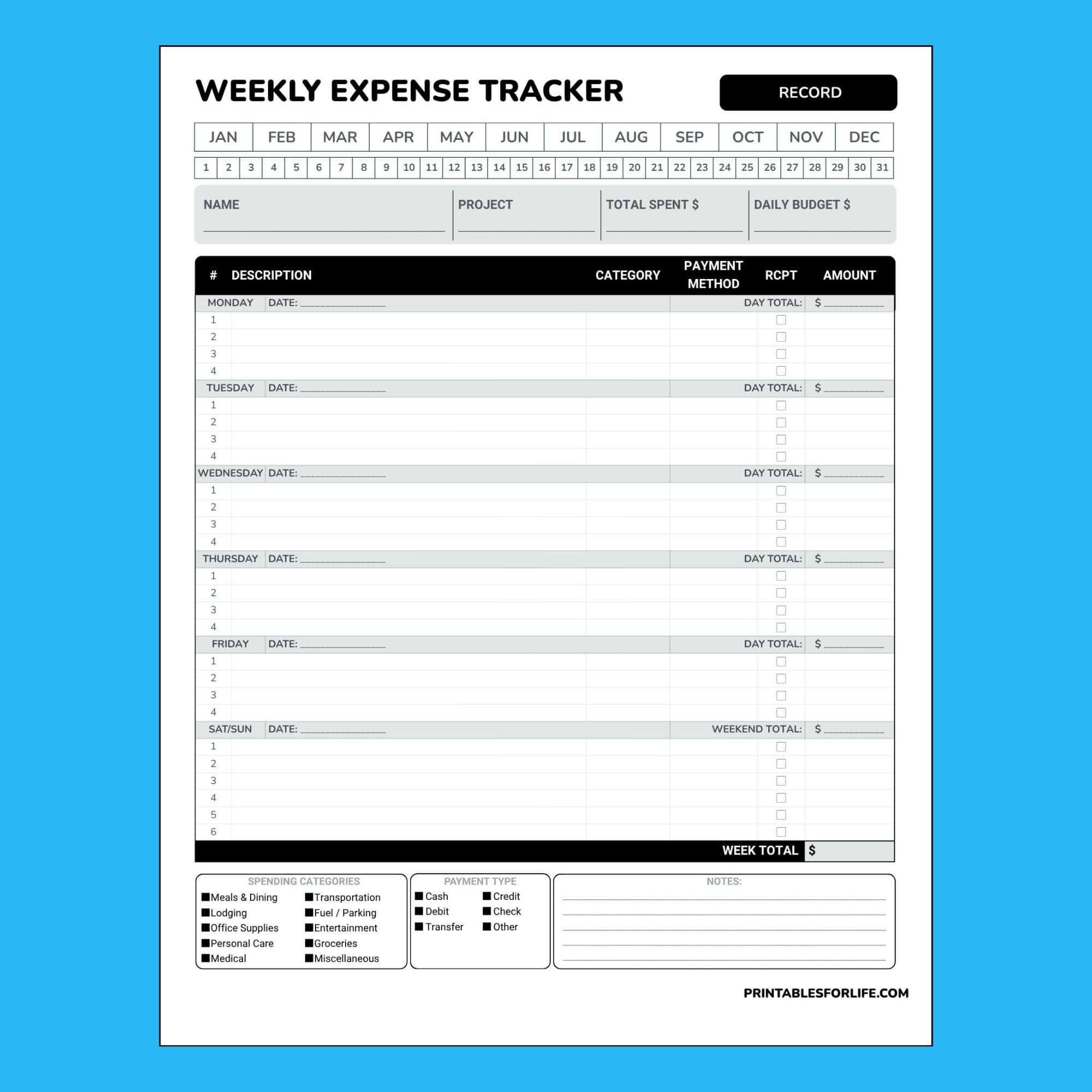
Free Weekly Expense Tracker Template PDF
THE BEES ARE BUZZING
☀️ Summer is Here! 🌴
Free Camping Bucket List (50 Fun Ideas for Families)
Ultimate Camping Packing List: Printable Checklist

Free Printable Summer Routine Checklist for Kids (Morning, Afternoon & Evening)
You have everything you need to start strong and stay consistent. For more tools that pair perfectly with this page, browse our Personal Finance collection. 💚
🦀 Summer Coloring 🏖️
From our sister site colorandtrace.com

Seashells Coloring Page
Crab Coloring Page