
This 60% solution budget template is a simple one-page worksheet for fast monthly planning 🧮.
If you are comparing it to a 50/30/20 budget planner, this version keeps things ultra simple. Print it and get budgeting in minutes.
Curious how it compares to other percentage rules? Try the 50/30/20 budget next.
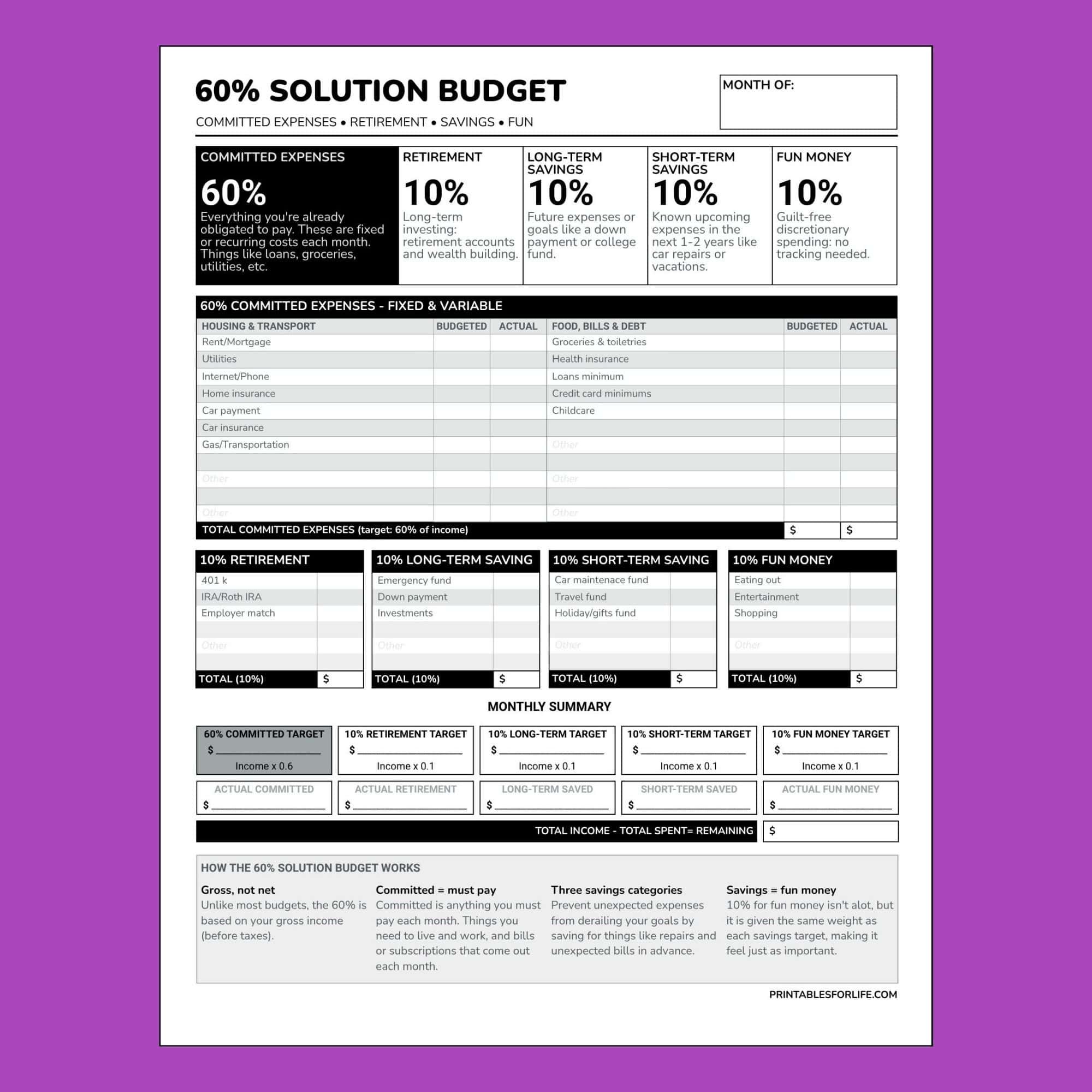
This budget planner template focuses on 60 percent for committed expenses, then gives you four 10 percent savings boxes for retirement, long term, short term, and fun.
The two-column boxed layout and grayscale design keep everything clean and easy to read, and the budgeted vs actual tables make tracking simple. If you already use a monthly budget, this fits right in with your other budgeting worksheets.
It is ideal for budgeting for beginners and anyone who wants a quick budget tracker without categories galore.
Pair it with a paycheck breakdown to plan pay periods, and add a savings tracker for goal progress. To stay on top of bills as you go, keep a bill tracker beside this money tracker template.
What’s Included
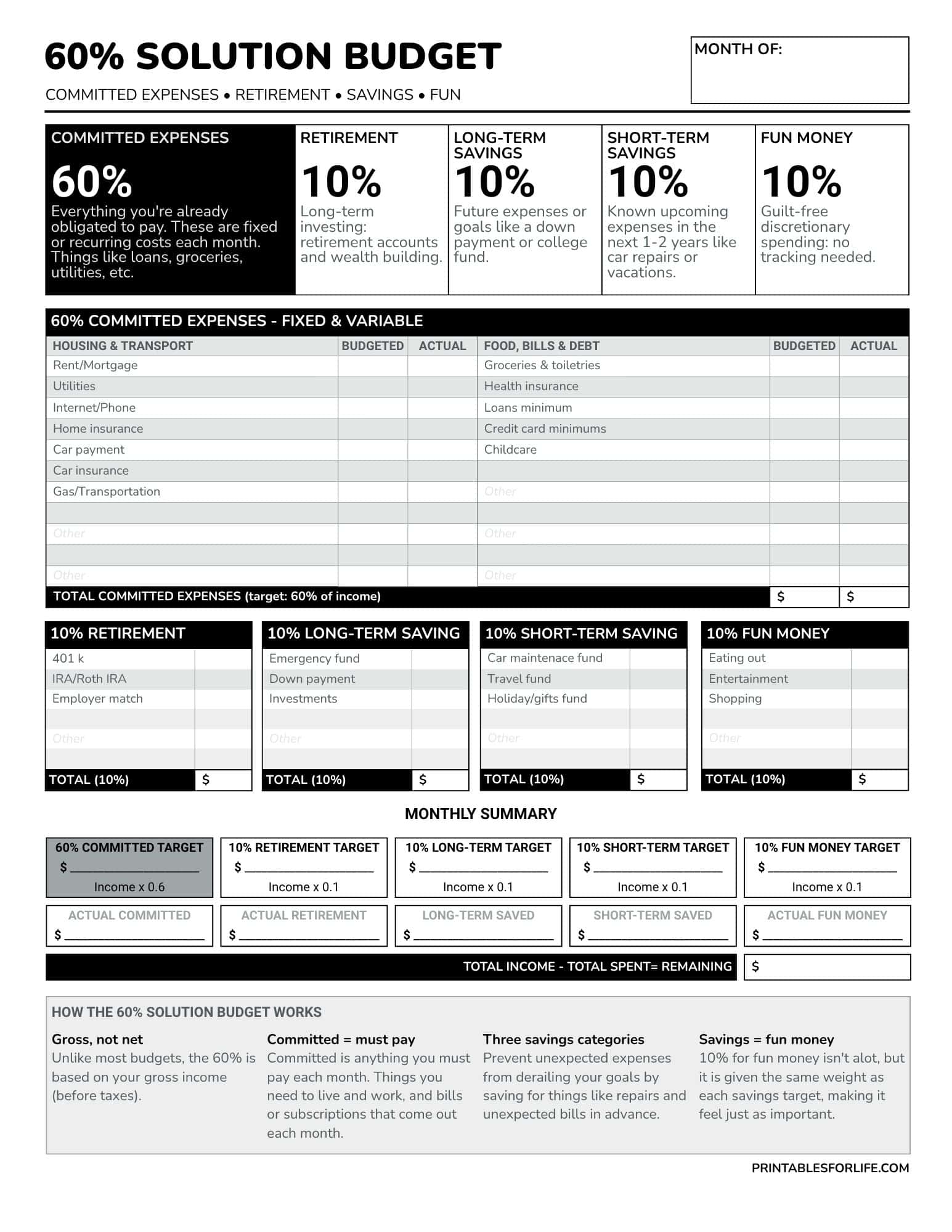
- One-page grayscale 60% Solution worksheet JPG
- Large left column for committed expenses
- Four 10% savings boxes: retirement, long term, short term, fun
- Budgeted vs actual tables for quick comparison
- Monthly summary and notes area
Features
- Minimal, grayscale boxed design
- Two-column boxed layout for clarity
- Prominent expenses column to track committed expenses
- Budgeted vs actual tables
- Monthly summary and notes section
- Print-ready single-page image
Who It’s For
- Individuals who want an easy monthly plan without complicated categories.
- Couples who prefer a shared, one-page view of spending and savings.
- Anyone budgeting for beginners who wants a gentle, fast start.
- People who like a percent-based framework and clear savings targets.
How to Use
- Print one worksheet for the month and write your take-home income at the top ✅.
- List all committed expenses in the large left column until you reach about 60 percent of income.
- Fill the four 10 percent savings boxes with targets like retirement, long term, short term, and fun.
- Use the budgeted vs actual tables to record what you planned and what really happened.
- Add quick notes in the monthly summary and adjust next month’s numbers.
- File the page in your binder to compare month over month 📁.
Planning Tips
- Print one copy per month and label it with the date for easy filing.
- Highlight committed expenses in one color and savings in another for quick scans.
- Review mid-month to update actuals and tweak the last two weeks.
- Combine with paycheck planning to time bills and transfers smoothly.
Related Posts
Exploring other frameworks? A clean percent approach like the zero based method might fit your style. Want more splits to try? Check out the balanced 30-30-30-10 setup. If debt payoff is the focus, pair your plan with a simple debt tracker. For big-picture planning across the year, grab the annual budget too.
You Might Also Like

Free 4th of July Signs | Patriotic PDF
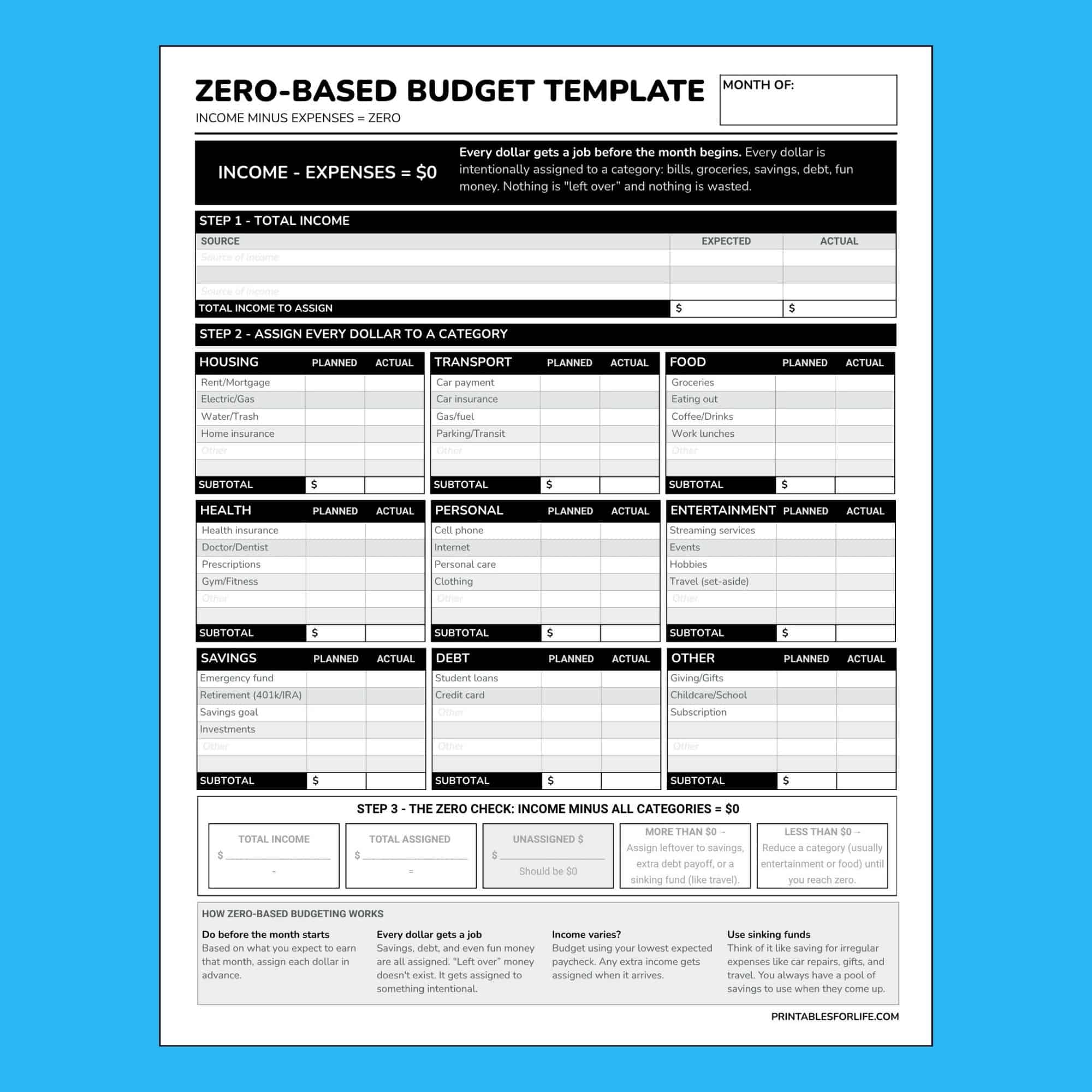
Free Zero Based Budget Template Printable Worksheet
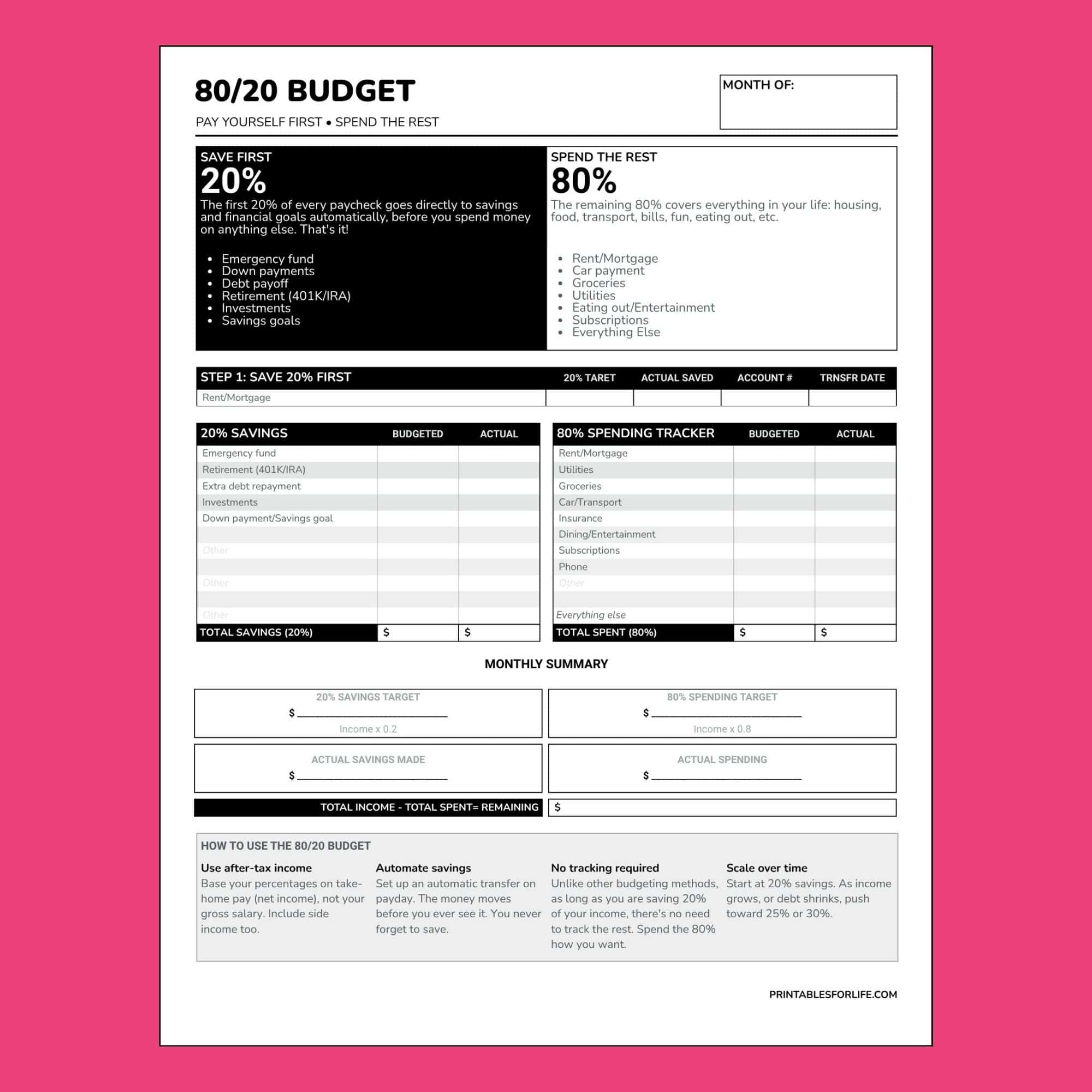
80/20 Budget Template: One-Page Worksheet to Save 20%
60% Solution Budget Template Printable | Simple Monthly Worksheet
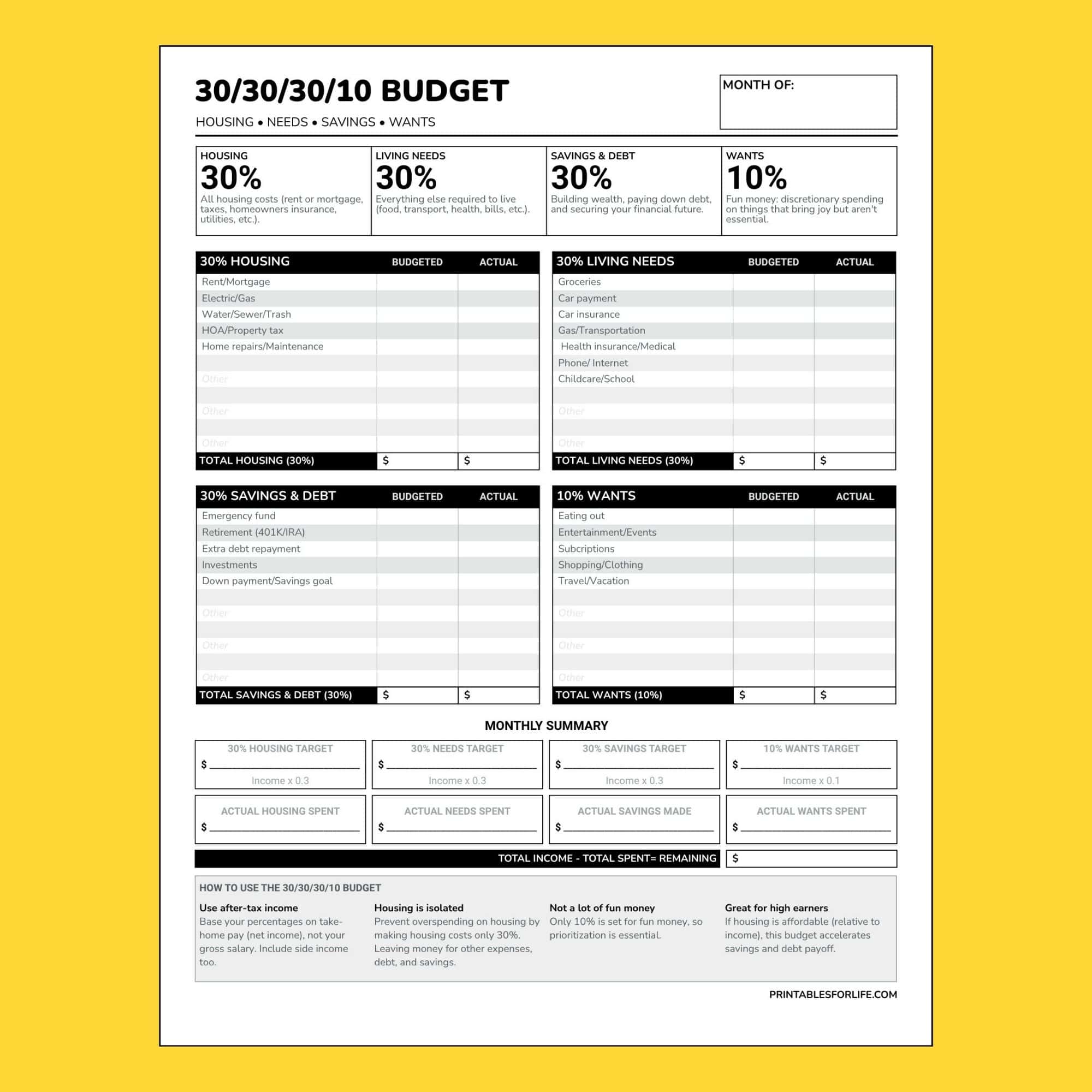
Free 30-30-30-10 Budget Template: One-Page Monthly Worksheet
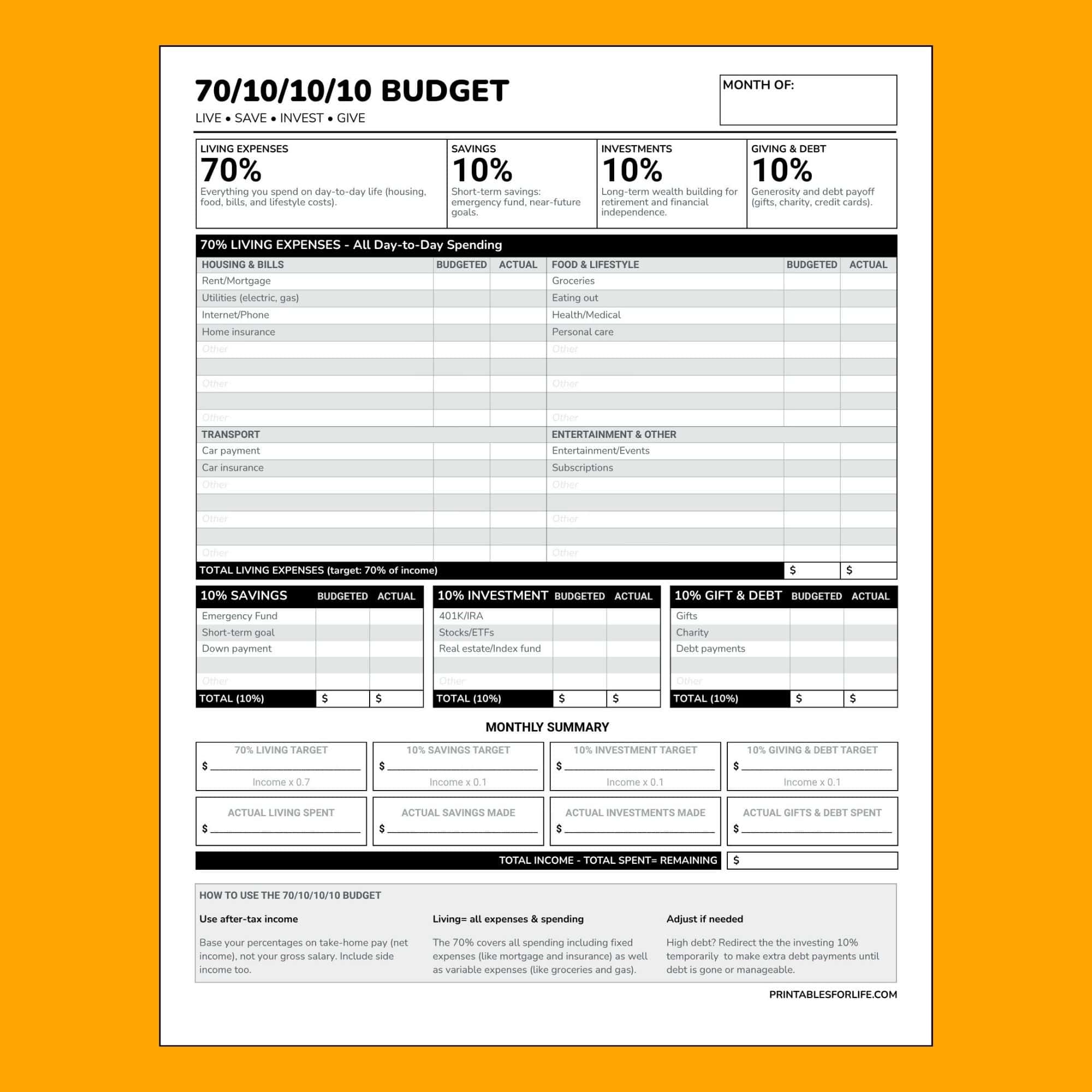
70-10-10-10 Budget Template Printable PDF
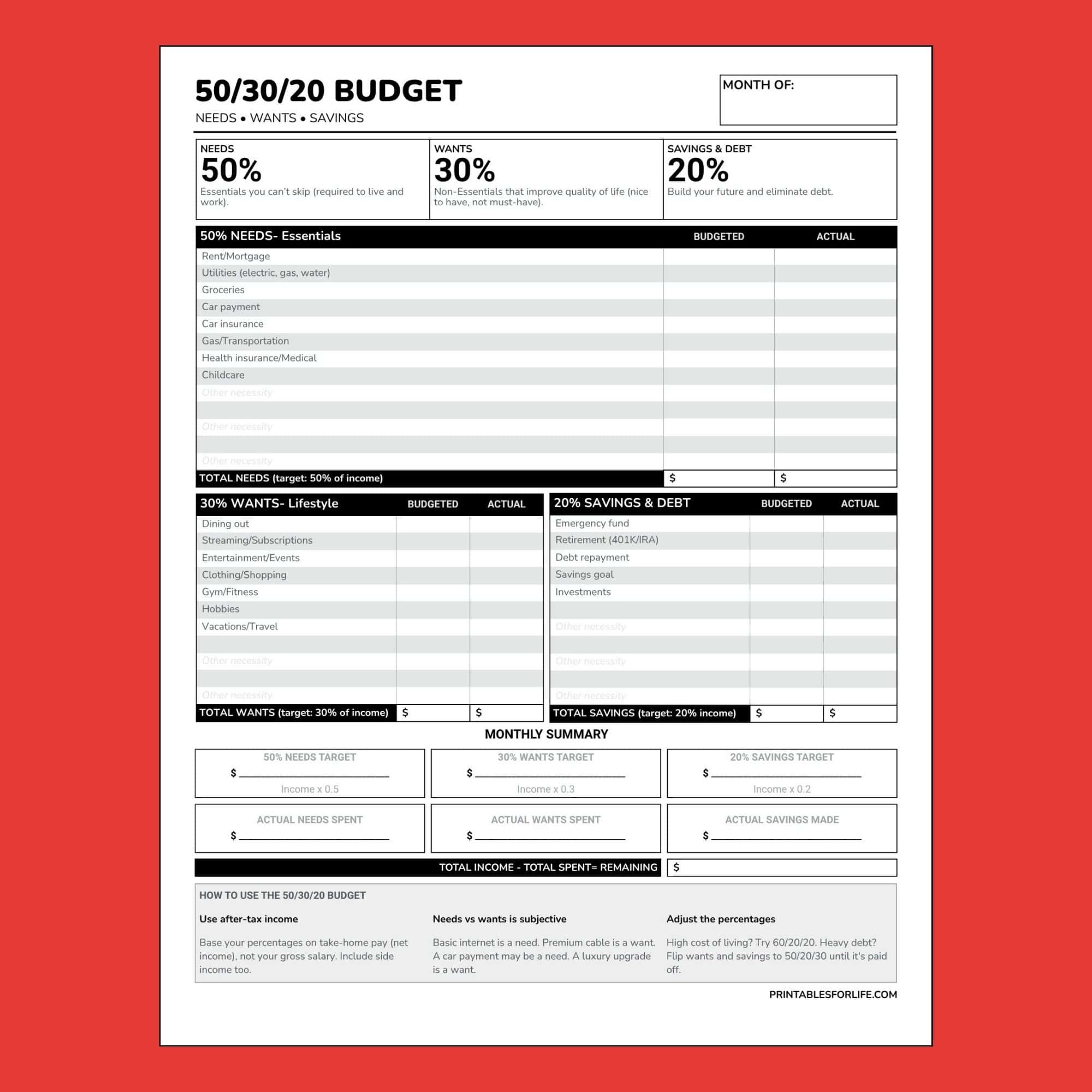
Best 50-30-20 Budget Template for Beginners: Free Printable Worksheet
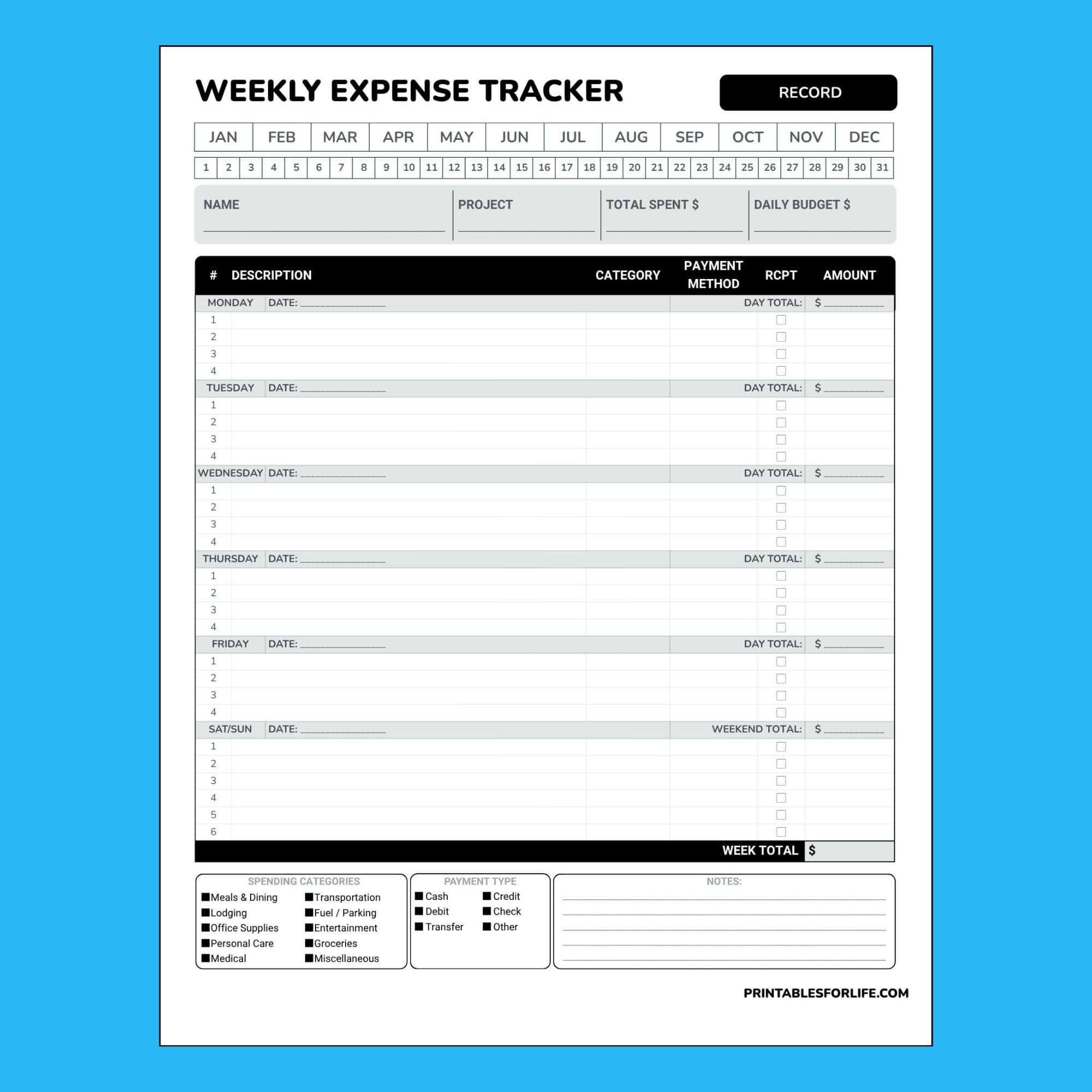
Free Weekly Expense Tracker Template PDF
THE BEES ARE BUZZING
☀️ Summer is Here! 🌴
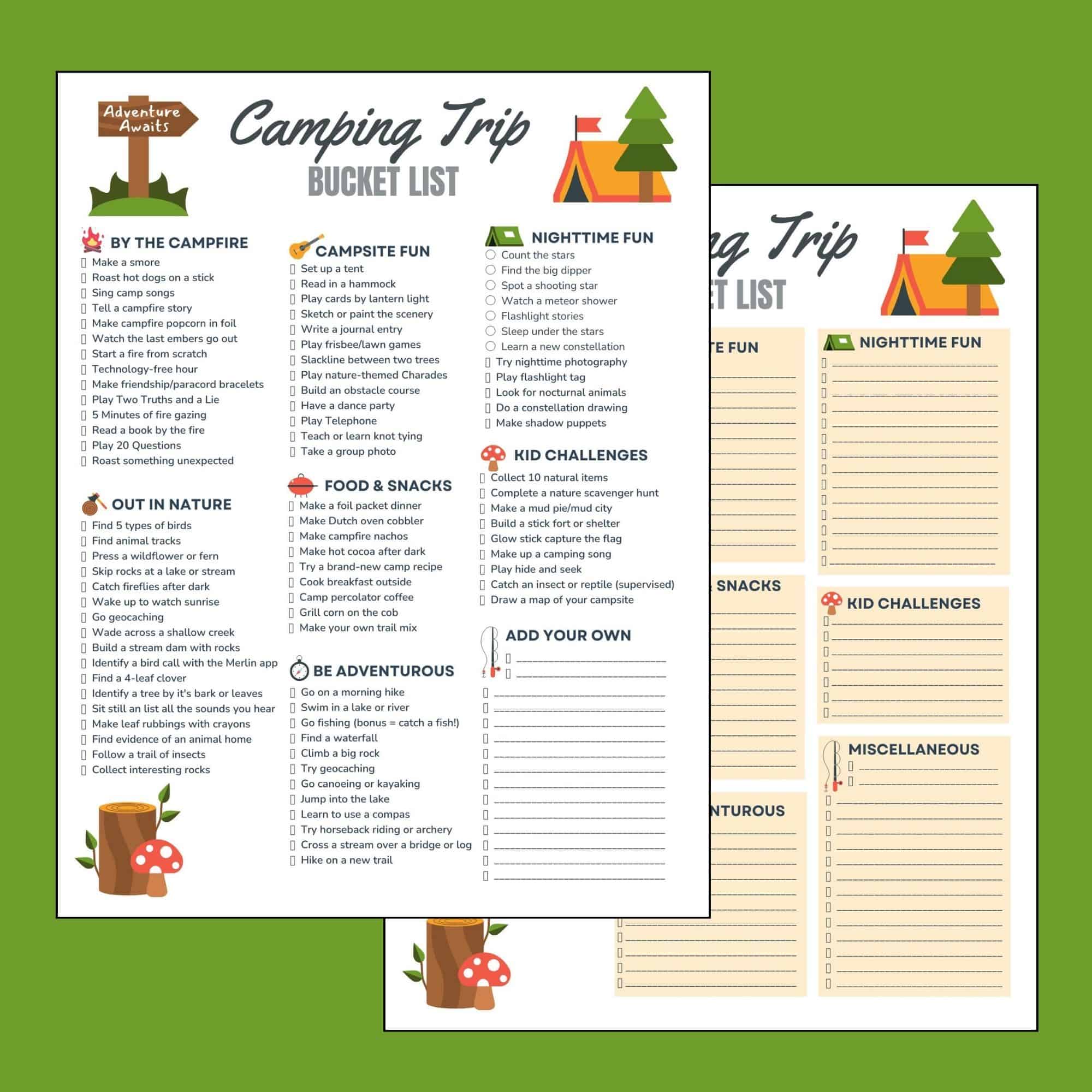
Free Camping Bucket List (50 Fun Ideas for Families)
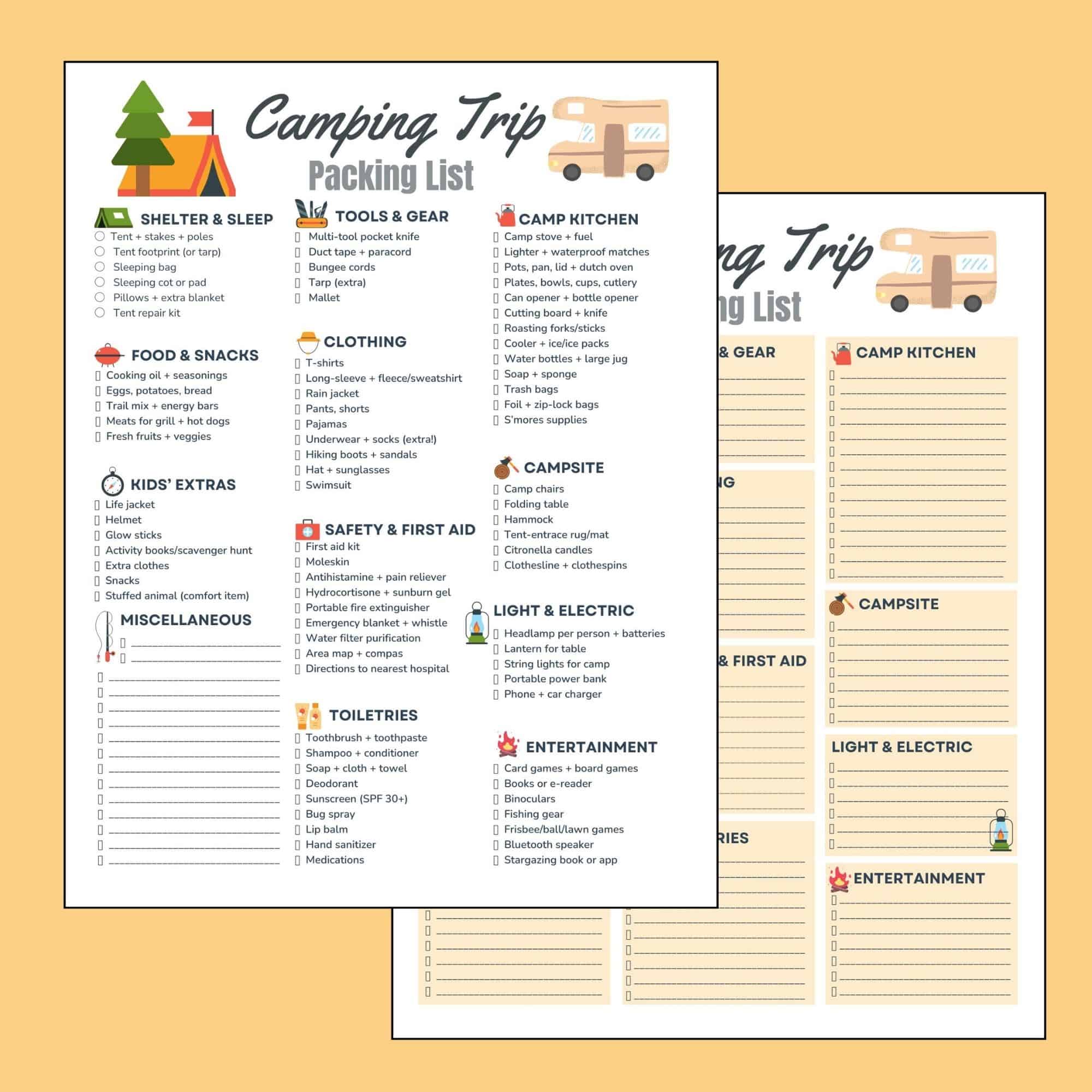
Ultimate Camping Packing List: Printable Checklist

Free Printable Summer Routine Checklist for Kids (Morning, Afternoon & Evening)
Ready to make your money plan stick? Browse our Business and Finance printables to round out your toolkit.
🦀 Summer Coloring 🏖️
From our sister site colorandtrace.com

Seashells Coloring Page

Crab Coloring Page